Built in Montreal in 1865, Relief was a 65-ton steamer. Its mission was to transport raw lumber from Ottawa to Burlington, Vermont by towing the logs on barges or scows. The journey took about a week to 10 days and involved a precipitous journey, involving rivers, canals, locks, rapids, American customs, and finally Lake Champlain. The voyage also involved a passage through the Lachine Canal in Montreal, with a stop at St. Gabriel’s lock in the notorious neighborhood of Griffintown.
Welcome to the one hundred and twenty-ninth installment of the Haunted Montreal Blog!
With over 600 documented ghost stories, Montreal is easily the most haunted city in Canada, if not all of North America. Haunted Montreal dedicates itself to researching these paranormal tales, and the Haunted Montreal Blog unveils a newly researched Montreal ghost story on the 13th of every month!
This service is free and you can sign up to our mailing list (top, right-hand corner for desktops and at the bottom for mobile devices) if you wish to receive it every month on the 13th! The blog is published in both English and French!
After a brutal winter, our full slate of outdoor ghost walks are back from the dead! Haunted Griffintown, Haunted Downtown, and Haunted Mountain have joined Haunted Old Montreal on our public schedule.
Our Haunted Pub Crawl continues every Sunday at 3pm in English, and the last Sunday of the month in French…Canadiens Playoff schedule permitting.
And we’ve got a new Paranormal Investigation this month! More info in the Company News Section.
This month we revisit the Black Rock, the Irish Famine cemetery marker surrounded by paranormal activity and political machinations.
Haunted Research
In March 2018, Haunted Montreal first wrote about The Black Rock, a 30-ton granite boulder that marks the site of the city’s second mass grave for Irish Famine victims. Located in an industrial area on Bridge Street, the cemetery has been desecrated repeatedly since 1847.
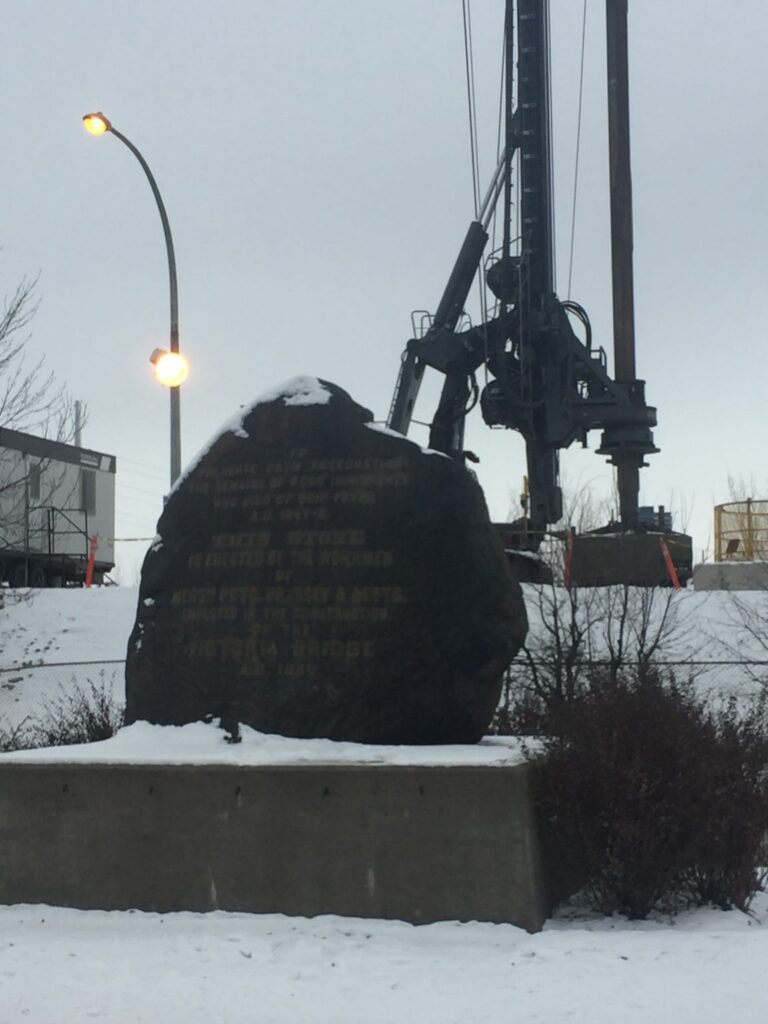
Over the years, companies have used it as a garbage dump, laid railroad tracks across it and surrounded it with a highway.
More recently a caisson was driven into the heart of the cemetery for a pylon to support the REM light rail system. This resulted in fourteen skeletons being smashed up, then excavated and sent to a laboratory for study.
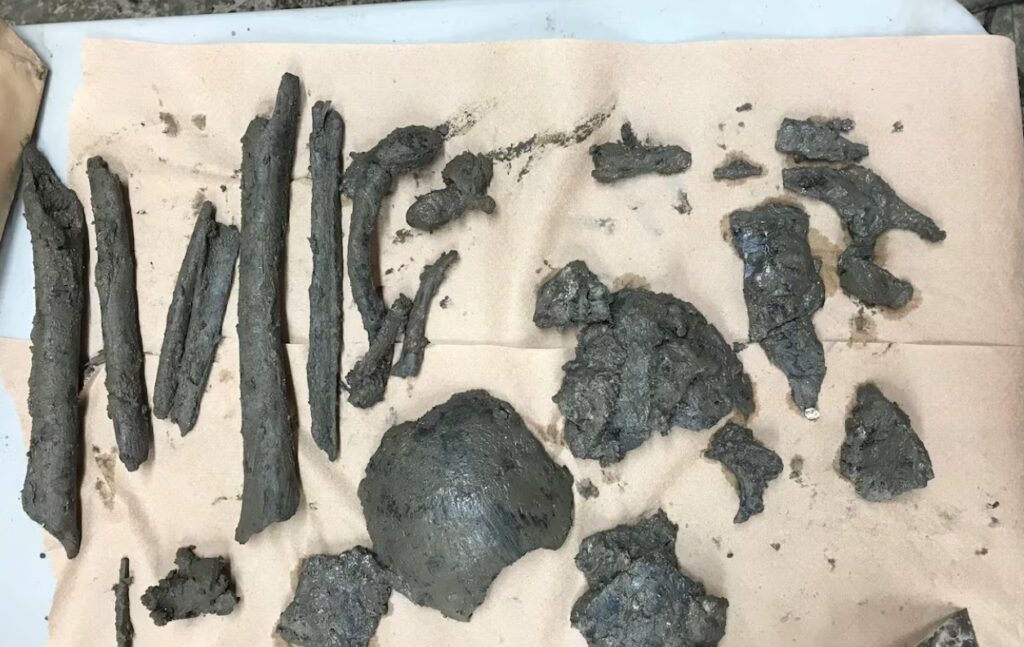
Needless to say, all of the desecration has resulted in paranormal activity at the cemetery. Ghosts are allegedly haunting both the cemetery and the REM train system.
Today, efforts are being made to transform the derelict resting place of 6000+ souls into a world-class park.
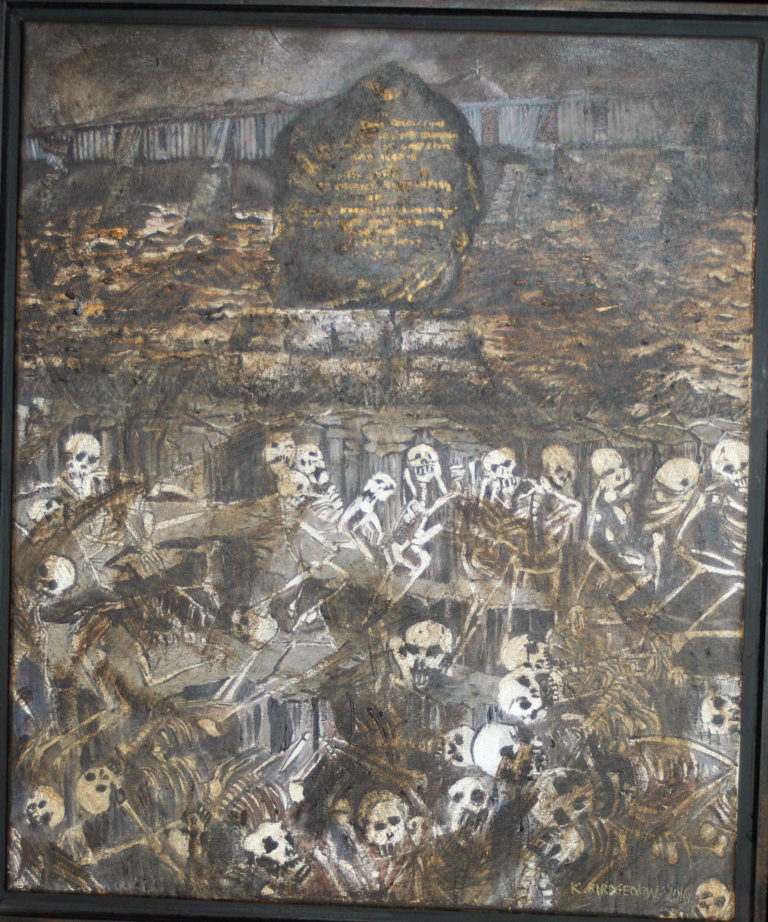
However, despite good intentions, there are major issues with governance of the project.
The Montreal Irish Monument Park Foundation was established in 2014 by Victor Boyle, President of the Ancient Order of Hibernians, as the primary founder.
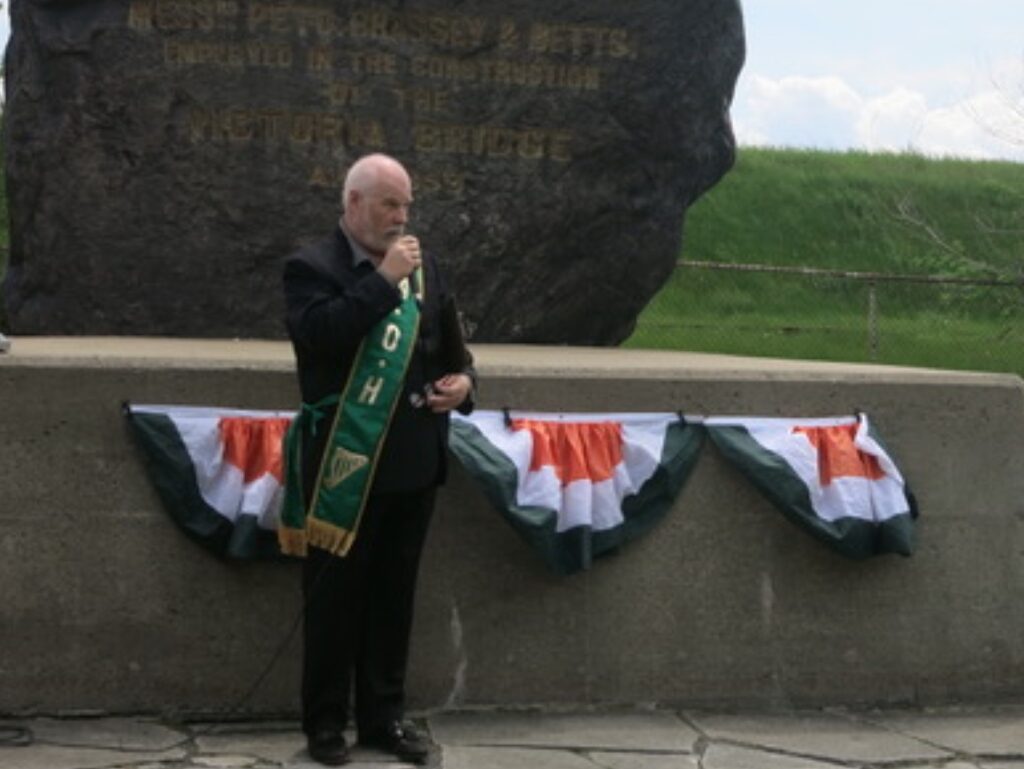
He invited amateur historian Fergus Keyes to sign the paperwork to establish the organization. They then recruited local Irish community members, politicians, professional historians and international academics to help establish a world-class park on the Irish Famine graveyard. I was asked to join the Board of Directors and accepted.
As the years passed, the project began to take shape slowly. However, there were also tensions within the Montreal Irish Monument Park Foundation’s administration and its membership. Notably, Fergus Keyes started posting material on the group’s Facebook page glorifying British genocidal figures like General Jefferey Amherst and John A. MacDonald.
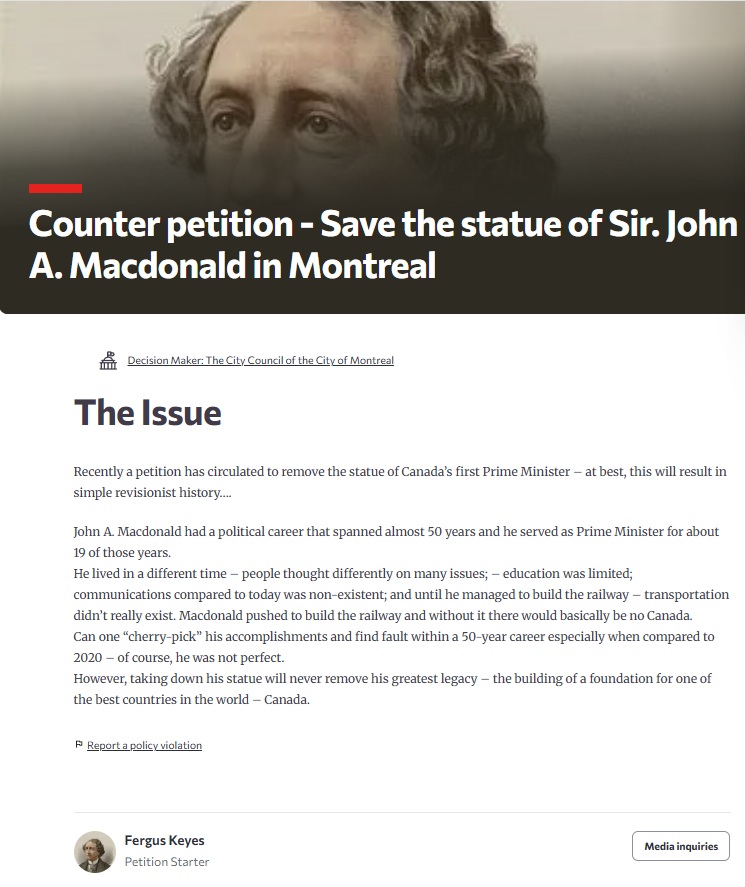
Given that British Imperialism was responsible for triggering The Irish Famine, many members of the foundation objected.
In response, Keyes blocked and excluded anyone from the project who disagreed with him. This caused more people to protest, including board members.
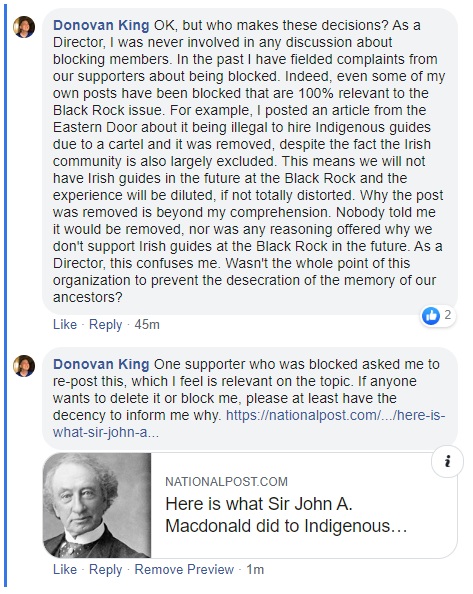
It wasn’t long before dissenting members of the Board of Directors, myself included, were also scrubbed and replaced – without any voting or governance whatsoever. Other supporters, including the world’s leading academic experts on the Irish Famine in Canada, were soon excluded as well.
Reaction was swift and various stakeholders called for a third-party leadership review, including The Mohawk Mothers. In June 2023, an article appeared in the Eastern Door entitled “Mohawk Mothers defend Black Rock gravesite”.
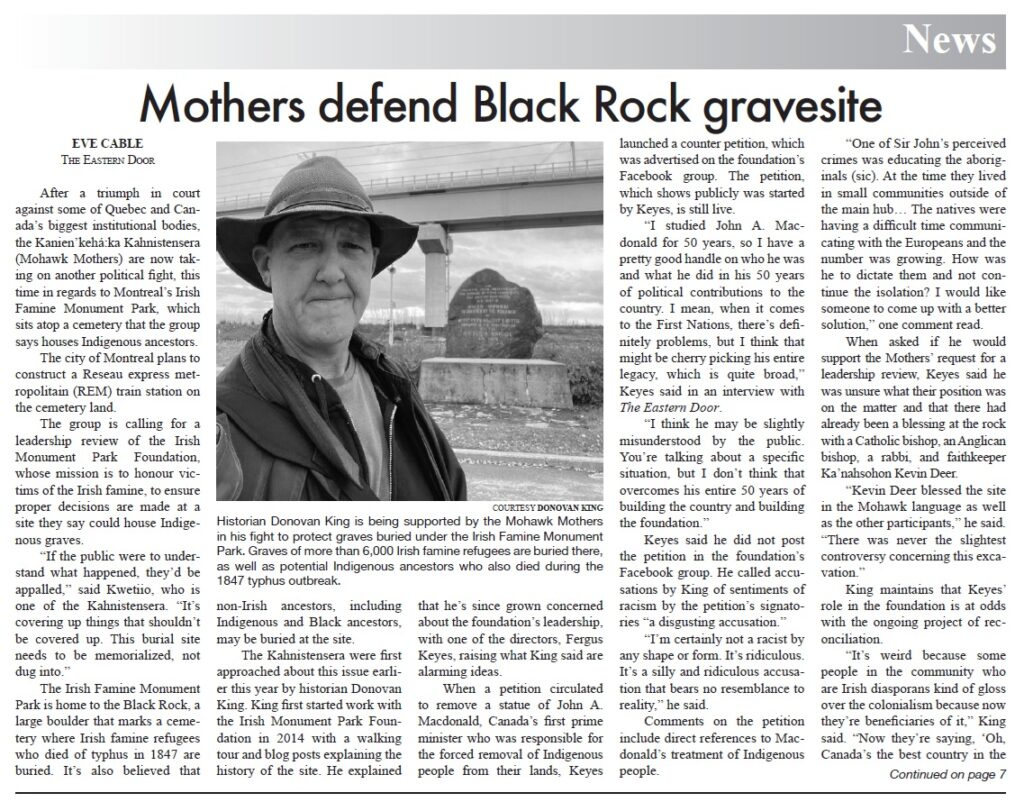
In the article, Mohawk Mother Kwetiio stated:
“It irked me that someone who was a person on the board was using the platform to promote (keeping the John A. Macdonald statue), because it’s contrary to our people, and it’s racist.” She added: “It’s a big no-no to be profiting off someone’s burial ground, and it also shouldn’t be destroyed in the first place”.
However, Hydro-Québec is now in charge of the park project after buying the land for an electricity substation.

Their bureaucrats refused to consider the leadership review.
In October of the same year, CBC’s The Passionate Eye produced an episode called “Inside the Statue Wars”. It examined colonial statues being toppled and painted red across Canada due to their connections with genocide against Indigenous Peoples.
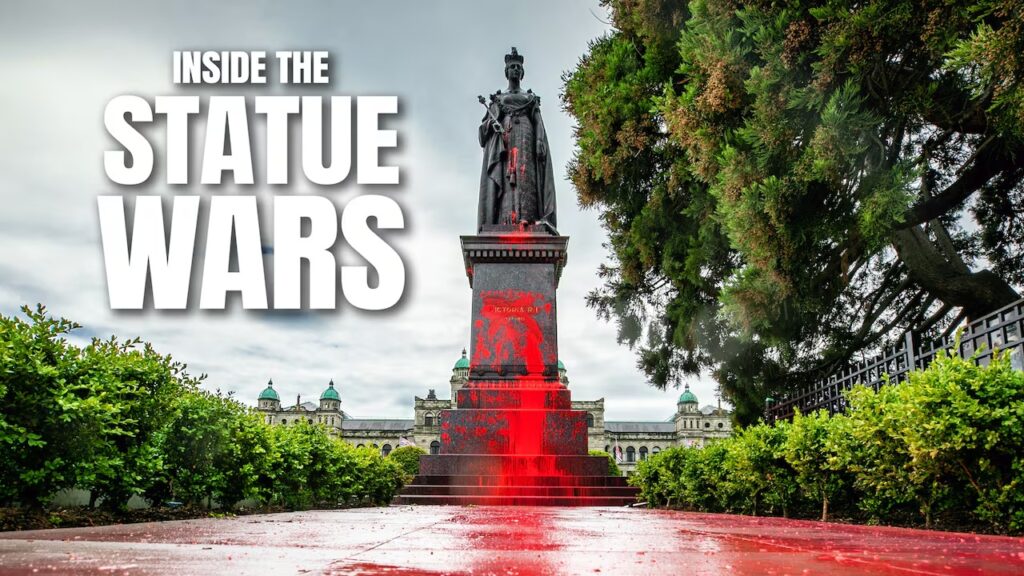
The episode features various Indigenous people and academics explaining why the genocidal statues are offensive and need to be retired. Fergus Keyes also appeared in the documentary, arguing strongly in favor of preserving the racist colonial statues. According to CBC:
“Fergus Keyes is the director of the Montreal Irish Monument Park Foundation and a self-described history buff. He is a staunch supporter of John A. Macdonald and even has a miniature statue of Canada’s first prime minister in his home.”
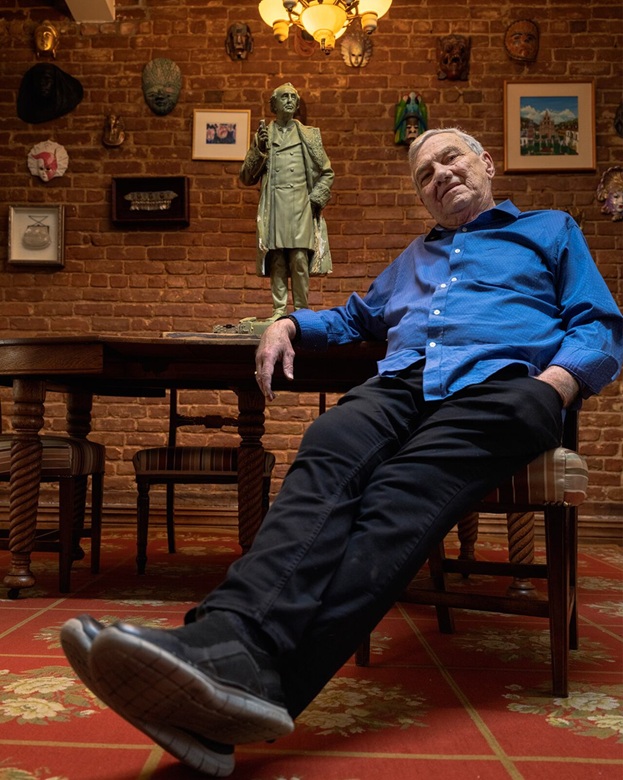
The statue is not the only offensive item in Keyes’ macabre collection. Keyes was present while archaeologists were unearthing skeletons after driving a caisson into the heart of the graveyard to erect a pylon for the REM light rail system. He snatched a piece of a broken famine coffin from the sacred burial ground, which now hangs on his wall.
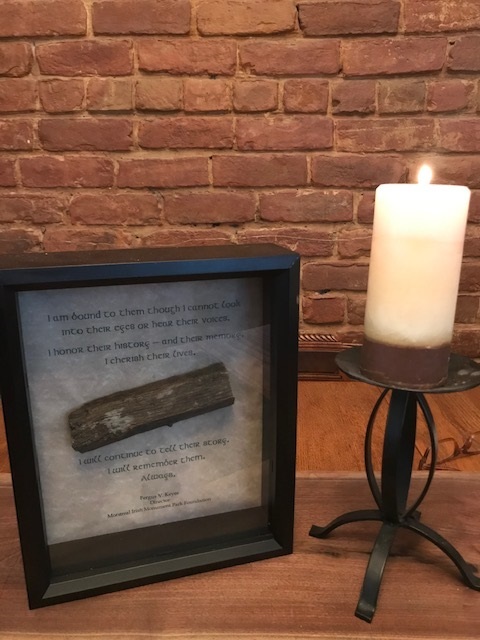
In the next scandal, Fergus Keyes by-passed the Board of Directors to work with a local microbrewery in crafting a “Black Rock Beer”.
Outrage followed, with Victor Boyle demanding that the microbrewery cease and desist from brewing any more of the Irish Famine stout. He compared it to “Holocaust Wine”.
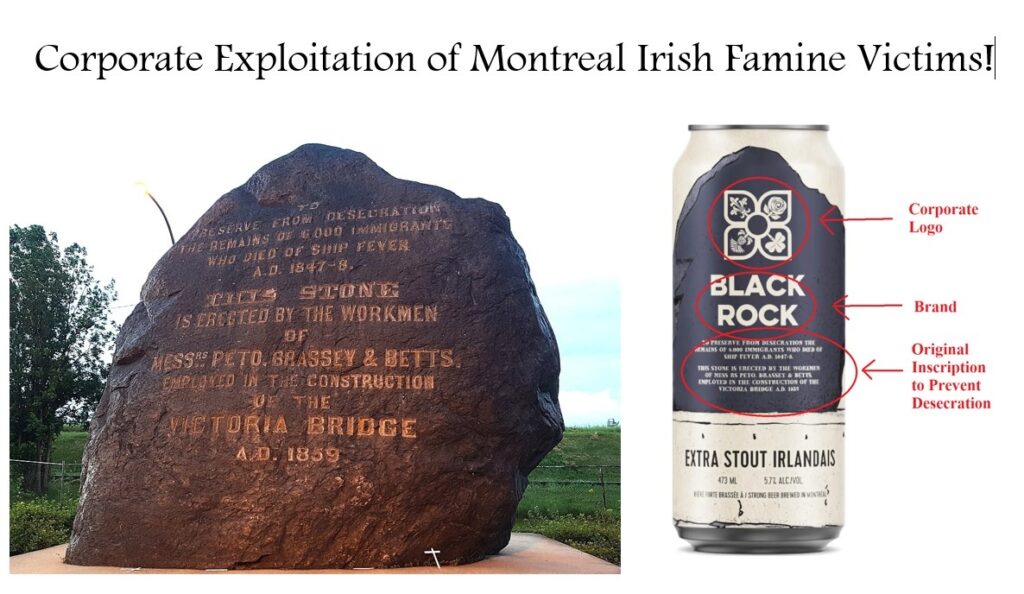
Boyle stated: “Unfortunately [the microbrewery] met with an individual who acted alone and did not share the idea with the AOH, The Park Foundation Board or the Irish community.”
Then, in March 2024, the Montreal Irish Park Foundation retaliated. It stated on its Facebook page that Victor Boyle “departed” because he was “no longer aligned with the other directors and partners of the Park Foundation regarding the future of the project and how best to achieve our goals” due to “differences in vision”.
However, as the President of the Ancient Order of Hibernians (AOH) and the Irish Memorial Park Foundation, Victor Boyle is adamant that he never “departed” but rather was pushed out against his will. He is now pursuing legal action.
The AOH has been trying to protect the cemetery from desecration since its Canadian division was founded in 1892 (the AOH in America was established in 1836). On the last Sunday of every month, Victor Boyle and the AOH organize the annual Walk to the Stone to commemorate the Famine Dead at the Black Rock Cemetery.

Excluding the President from the foundation is a kick in the teeth to the local Irish community and the thousands of Famine Dead buried at the Black Rock.
In 2025, the Montreal Irish Park Foundation announced that Lemay Architects were designing the park.

Founded in Verdun in 1957, Lemay’s website explains: “Inspired and strengthened by transdisciplinary creativity, the firm has also developed its very own NET POSITIVETM approach to guide teams towards sustainable solutions that shape a better future.”
However, the design put forward is raising a lot of eyebrows amongst the multitude of stakeholders who were excluded from the park project.
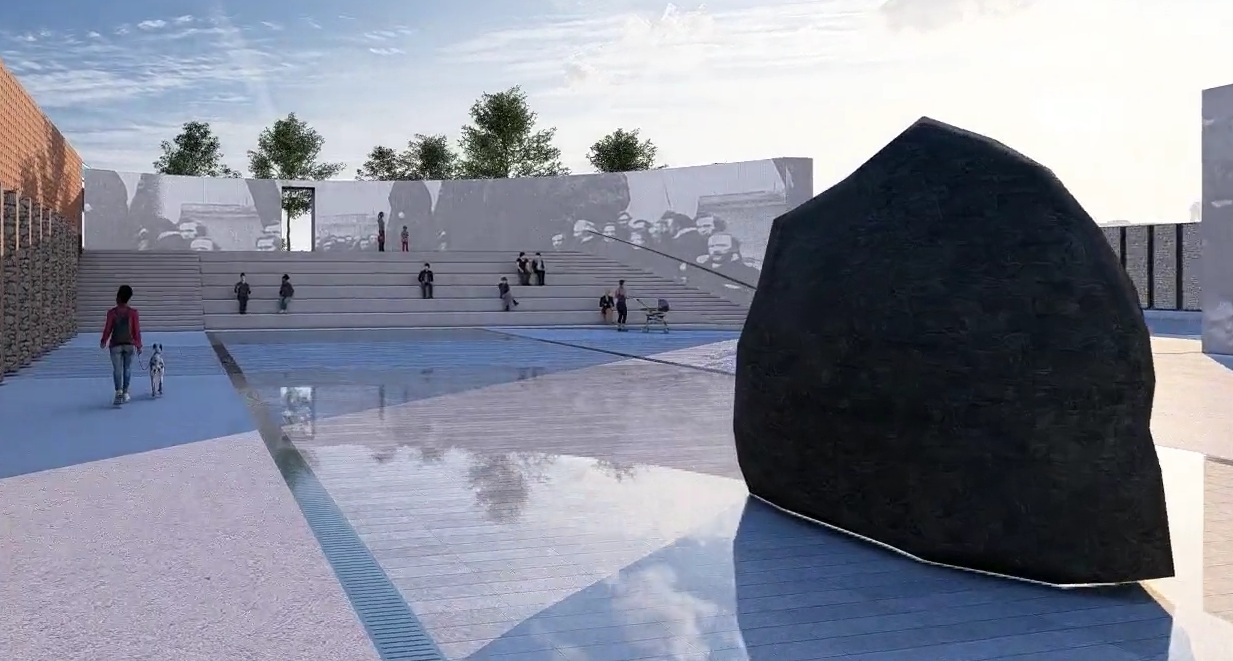
Firstly, it reimagines the cemetery as a community park with a large area surrounding the Black Rock paved over with stone tiles. It also includes curtain-like structures to be built on the cemetery, effectively shielding the Black Rock from passing commuters.

According to Lemay: “At its heart is a terraced agora, where the centrepiece of the Black Rock is framed by a reflective water feature that mirrors the sky and evokes the Irish immigrants’ perilous ocean crossing.”
Ironically, in the design images Lemay released of the “reflective water feature” depicts several children playing happily in the water, as they might in a splash pad.
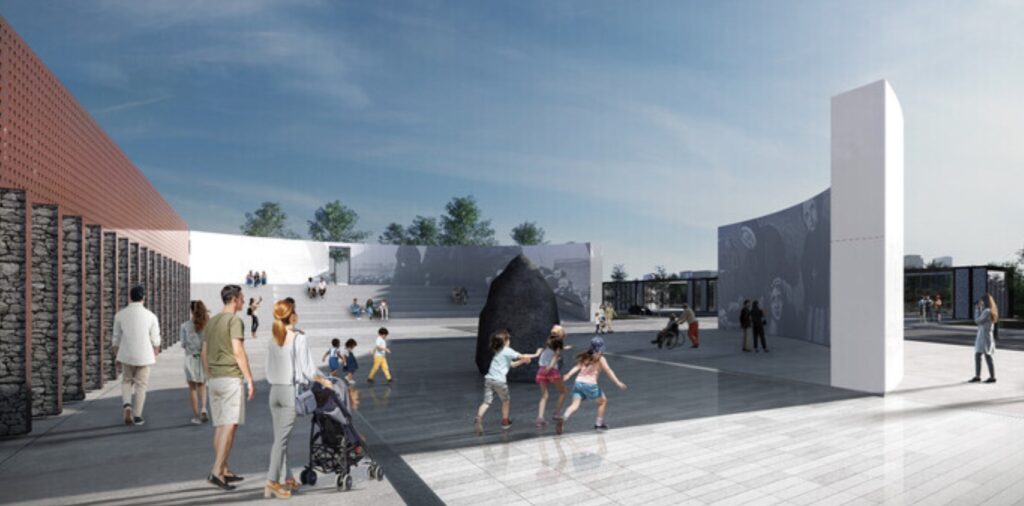
Other images presented by the company show people walking their dogs on the hallowed cemetery. Furthermore, the green areas outside of the paved over “centerpiece” are littered with boulders in the design.
Overall, Lemay’s concept arguably evokes a recreation area more than a sacred cemetery. The atmosphere depicted seems playful, informal and multi-purpose. Dog-walkers, children seeking a splash pad, and joggers will likely distract those who want to contemplate the burial ground’s tragic history and the 6000+ souls resting below the earth.
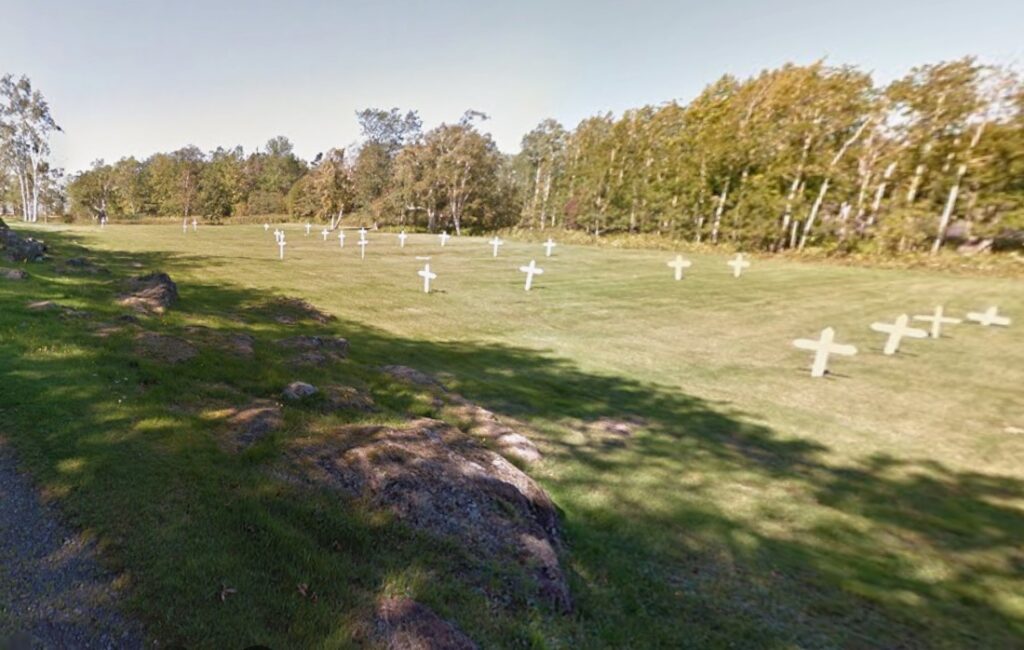
In comparison, the Irish Famine cemetery on Grosse-Île is very well designed. The mass grave is grassy, the burial trenches are evident in the soil depressions, and it is marked with dozens of white crosses.
People are discouraged from walking on the mass grave. Instead, there is a commemorative viewing area where visitors can stand while contemplating the rolling mounds and the 5000 or so Irish refugees buried under them.
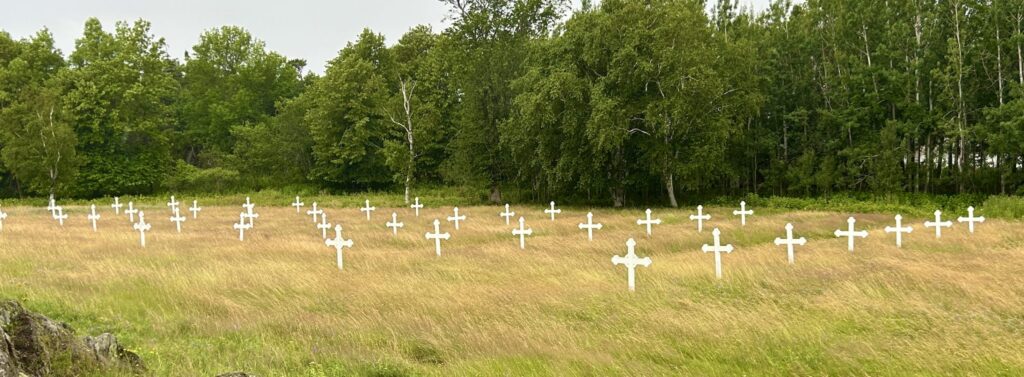
Visiting it is widely described as a profound experience.
In addition, a 14-metre-tall granite Celtic Cross towers over the island’s highest point, Telegraph Hill. Erected in 1909 by the AOH, the solemn monument complements the cemetery with its Irish religious symbolism.
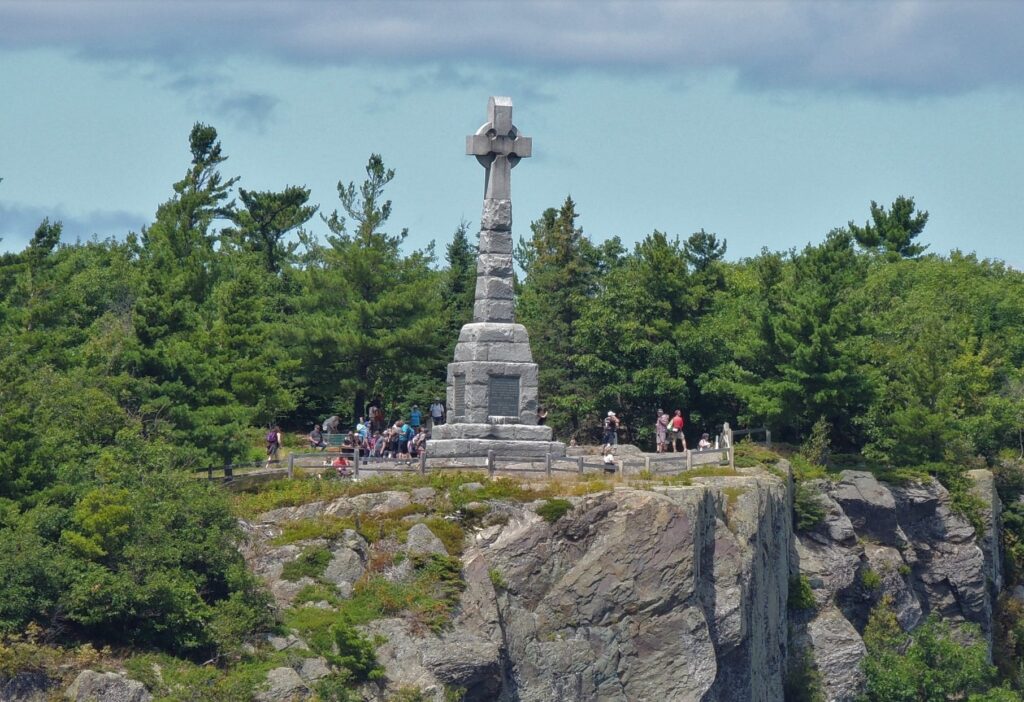
The overall design on Grosse-Île is top-notch. It respects the Famine cemetery and provides visitors with a sombre and contemplative atmosphere that will leave lasting impressions.
In contrast, Lemay’s NET POSITIVE™ design highlights the company’s “commitment to creating sustainable, healthy, and accessible living environments for all”.
While Lemay’s goals are noble, the Black Rock Cemetery is meant to be a space reserved for the 6000+ Irish Famine Dead buried there. The current design, while well-intended, does not come close to matching the world-class Famine cemetery on Grosse-Île.
This is perhaps not surprising, given that the Irish Monument Park Foundation expelled its foremost experts – AOH President Victor Boyle, along with countless academics, historians, conceptual artists, etc.
The question remains how the Famine ghosts will react to the proposed park design. The Dead do not like to be disrespected and the concept of children splashing in the reflecting pool above their graves, along with dog walkers and joggers traversing the burial grounds may not sit well. Of course, this could spur even more hauntings.
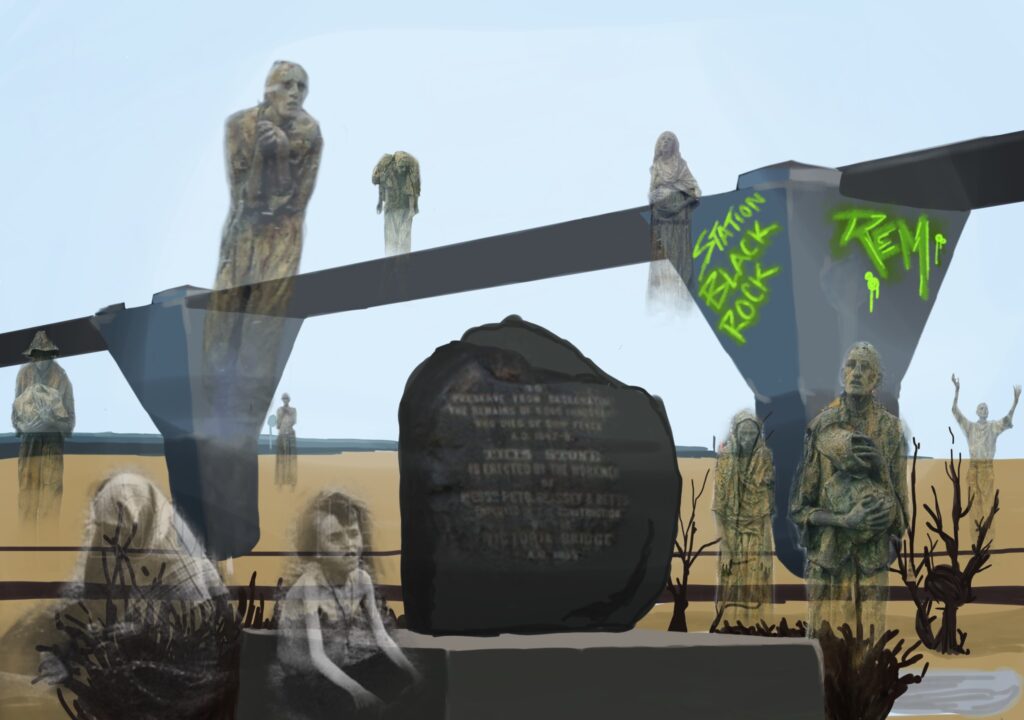
One thing is certain, for this park design to succeed it is imperative to invite the experts back into the project. Lemay’s design needs to go back to the drawing board with the original stakeholders being consulted. Only this way can a world-class park be designed and developed at Montreal’s Black Rock Irish Famine Cemetery.
Company News
Haunted Montreal and Dominique Desormeaux invite you to our newest Paranormal Investigation: The Dark Past of New France. This takes place in Old Montreal, and starts May 29th in French and May 30th in English. Details and ticket info will be available by the end of the week. Please check our social media channels and website.
The Irish Famine Walking Tour returns Saturday, May 30th, at 2pm. Donovan King takes you to key sites associated with Black ’47, the year 75,000 Irish refugees fleeing the Famine landed on Montreal’s wharves. This includes the Black Rock, the subject of this very blog.

No longer in the test phase, we will be launching Colonial Secrets of Old Montreal later this month. This daytime tour hosted by Sophie-Claude Miller smashes through the “tourist gaze” to reveal the area’s hidden histories, glossed-over facts and dark truths.
Haunted Old Montreal continues to run, as Haunted Griffintown, Haunted Downtown, and Haunted Mountain join it on our public outdoor ghost walk schedule. Hosted by a professional actor and storyteller, these theatrical tours explore Montreal’s haunted hidden past, and ghostly present.
Our Haunted Pub Crawl continues to run every Sunday at 3pm in English, and the last Sunday of each month at 2pm in French. However, when there is a Montreal Canadiens Playoff game on Sunday at the Bell Centre, the bars on our tour near it will be full, so the Haunted Pub Crawl can’t happen. We are working on an alternate day for those weeks, so you can still enjoy some spirits with some spirits and cheer on the Habs.
Private tours for any of our experiences can be booked at any time based on the availability of our actors.
Clients can request any date, time, language and operating tour. These tours are based on the availability of our actors and start at $250 for small groups of up to 8 people. Email info@hauntedmontreal.com to book a private tour!
You can also bring the Haunted Montreal experience to your office party, house, school or event by booking one of our Travelling Ghost Storytellers today.

Hear some of the spookiest tales from our tours and our blog told by a professional actor and storyteller. You provide the venue, we provide the stories and storyteller. Find out more and then contact info@hauntedmontreal.com
In other news, if you want to send someone a haunted experience as a gift, you certainly can!
We are offering Haunted Montreal Gift Certificates through our website and redeemable via Eventbrite for any of our in-person or virtual events (no expiration date).

Our online shop is offline for the next few months. If you would like to purchase any Haunted Montreal-branded t-shirts or mugs in the meantime, please contact us at info@hauntedmontreal.com
Holly and Dr. Mab are back! Now part of Stygian Media, they will continue releasing Haunted Montreal videos based on our blogs in English and French among other horror-themed content.

Please like, subscribe and hit the bell!
Haunted Montreal also has temporarily altered its blog experience due to a commitment on a big writing project! Until further notice, we will be offering updates on old stories every second month and the regular blog service alternating.

Haunted Montreal would like to thank all our clients who attended a ghost walk, haunted pub crawl, paranormal investigation or virtual event!
If you enjoyed the experience, we encourage you to write a review on our Tripadvisor page and/or on Google Reviews – something that really helps Haunted Montreal to market its tours.

Lastly, if you would like to receive the Haunted Montreal Blog on the 13th of each month, please sign up to our mailing list.
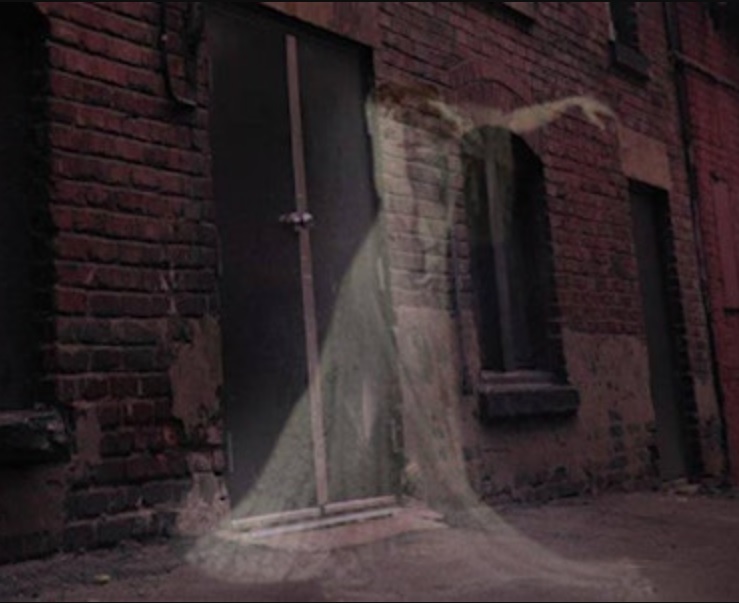
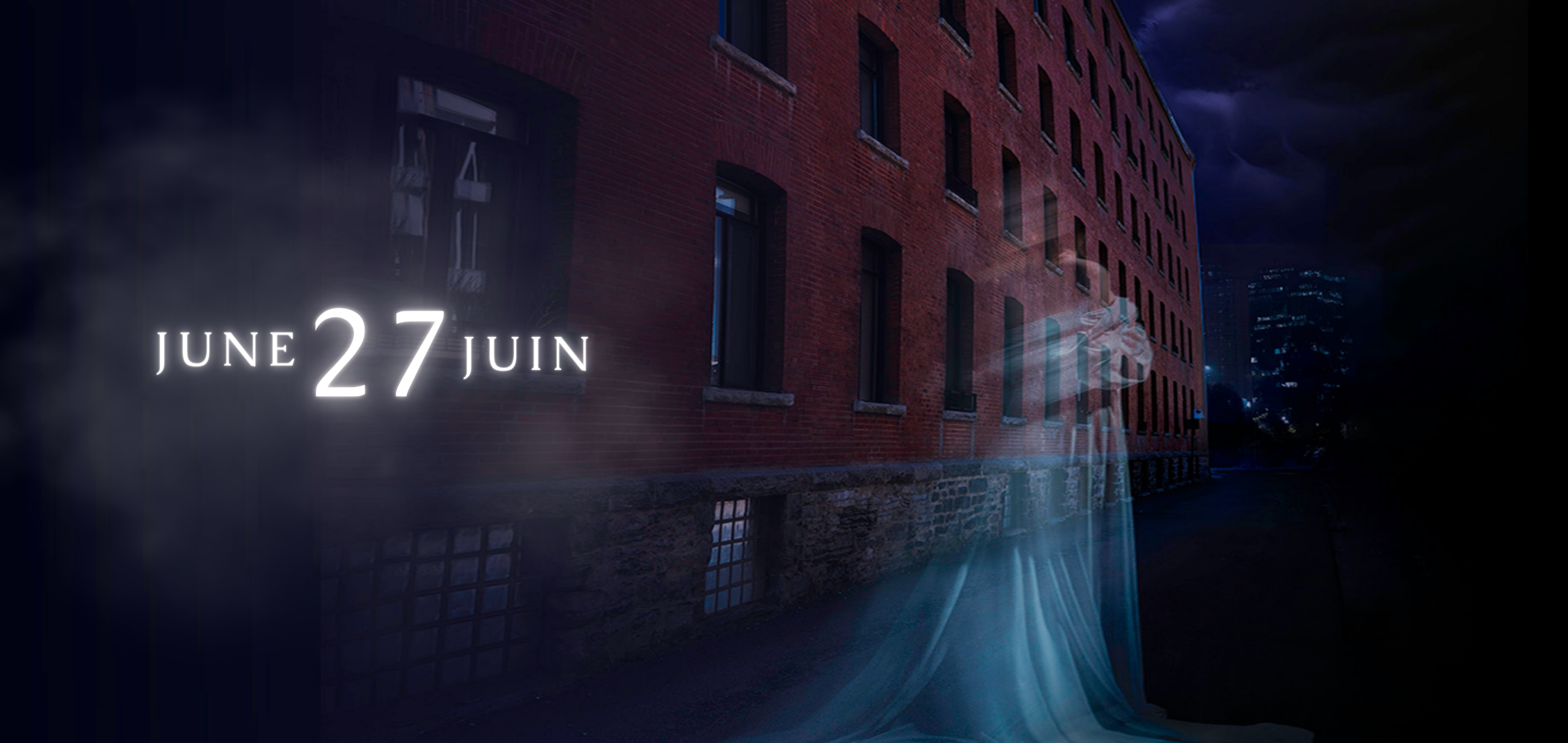
Update on June 13: The Ghost of Headless Mary Returns on June 27th
Every seven years on the anniversary of her murder, the headless ghost of Mary Gallagher returns to Griffintown. Her last appearance was in 2019, which means she is returning again this year. Haunted Montreal is planning a host of activities including a book launch, statue unveiling, ghost tours, a candle-lit memorial and much more to welcome her back! Stay tuned for more details!
Author:
Donovan King is a postcolonial historian, teacher, tour guide and professional actor. As the founder of Haunted Montreal, he combines his skills to create the best possible Montreal ghost stories, in both writing and theatrical performance. King holds a DEC (Professional Theatre Acting, John Abbott College), BFA (Drama-in-Education, Concordia), B.Ed (History and English Teaching, McGill), MFA (Theatre Studies, University of Calgary) and ACS (Montreal Tourist Guide, Institut de tourisme et d’hôtellerie du Québec). He is also a certified Montreal Destination Specialist.
Translator (into French):
Claude Chevalot holds a master’s degree in applied linguistics from McGill University. She is a writer, editor and translator. For more than 15 years, she has devoted herself almost exclusively to literary translation and to the translation of texts on current and contemporary art.
Related Posts
Comments (0)