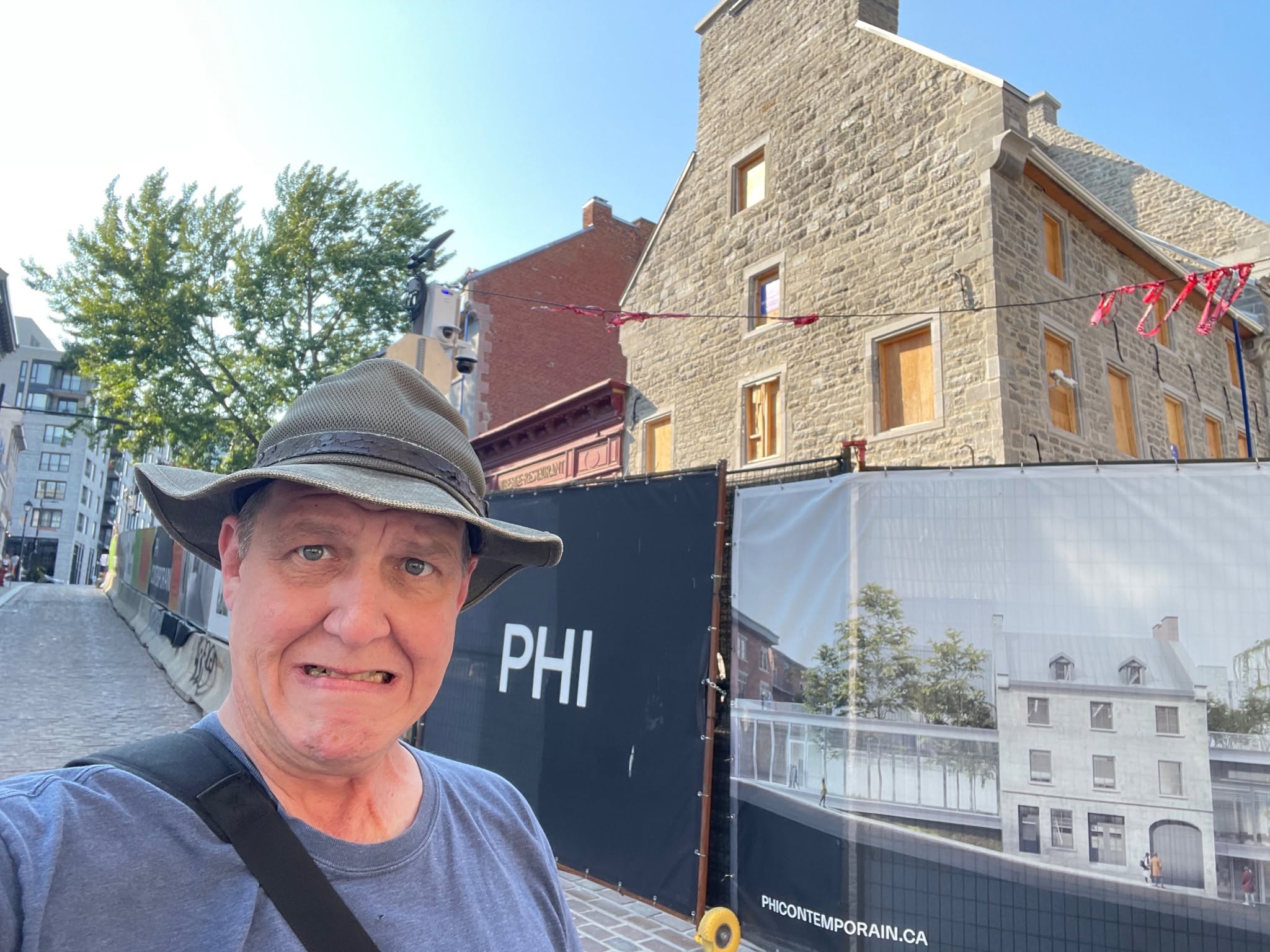
We asked a security guard about the ghosts in the building, and he assured us they were all gone. When asked if anyone had done an exorcism, he said no. In fact, the guard was adamant that Maison Pierre du Calvet was no longer haunted. He seemed annoyed at our line of questioning, so we departed. The following day another guard was present who seemed more accommodating...
Welcome to the one hundred and twenty-fourth installment of the Haunted Montreal Blog!
With over 600 documented ghost stories, Montreal is easily the most haunted city in Canada, if not all of North America. Haunted Montreal dedicates itself to researching these paranormal tales, and the Haunted Montreal Blog unveils a newly researched Montreal ghost story on the 13th of every month!
This service is free and you can sign up to our mailing list (top, right-hand corner for desktops and at the bottom for mobile devices) if you wish to receive it every month on the 13th! The blog is published in both English and French!
With the winter weather already here, our public tour schedule has moved indoors. Our Haunted Pub Crawl runs every Sunday at 3 pm in English. Tours in French happen on the last Sunday of every month at 2 pm.

You can still book all of our experiences, except for Haunted Mountain, as private tours. These can be booked at any time based on the availability of our actors. Clients can request any date, time, language and operating tour. These tours start at $235 for small groups of up to 8 people.
We are also offering the Travelling Ghost Storyteller experience. Bring our stories to your party or event. More information on this, our schedule, Gift Certificates and our shop in the Company News section.
This month we take a look at purportedly haunted clocks along one street in Old Montreal and ask if it may have something to do with the desecration of French colonial cemeteries.
Haunted Research
Montreal, like most cities, has outdoor clocks gracing banks, train stations, City Hall and many other prominent locations. Some of these timepieces are freestanding whereas others are built into the facades of buildings.
However, while noted for their historical charm and timekeeping abilities, some of Montreal’s clocks are reputed to be haunted.
It is worth noting that, while rare, stories and legends about haunted clocks can be found all over the world. The most famous example is perhaps the Prague astronomical clock, officially called the Prague Orloj.
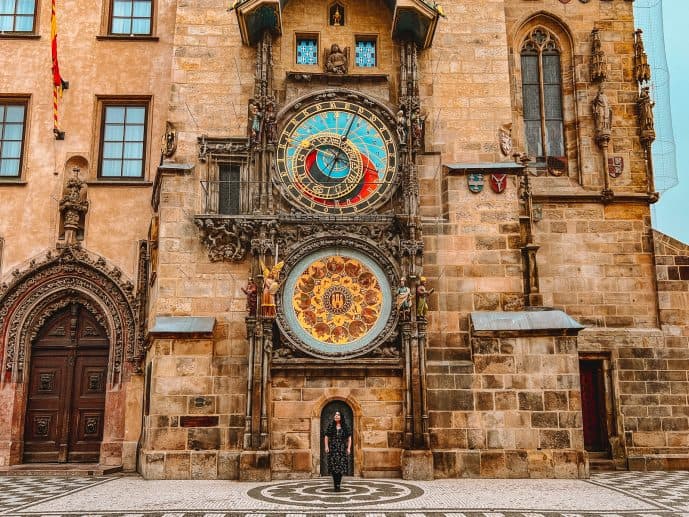
According to the legend, after clockmaker Master Hanuš built the Prague Orloj in 1410, city officials cut his eyes out to stop him from creating another masterpiece. In revenge, he supposedly cursed the clock, ensuring it would bring misfortune to the city if ever neglected, with his ghost personally guarding it.
The legend claims if the Prague Orloj stops, the city will suffer. Supposedly, the curse will be confirmed by the skeleton figure on the clock nodding its head.
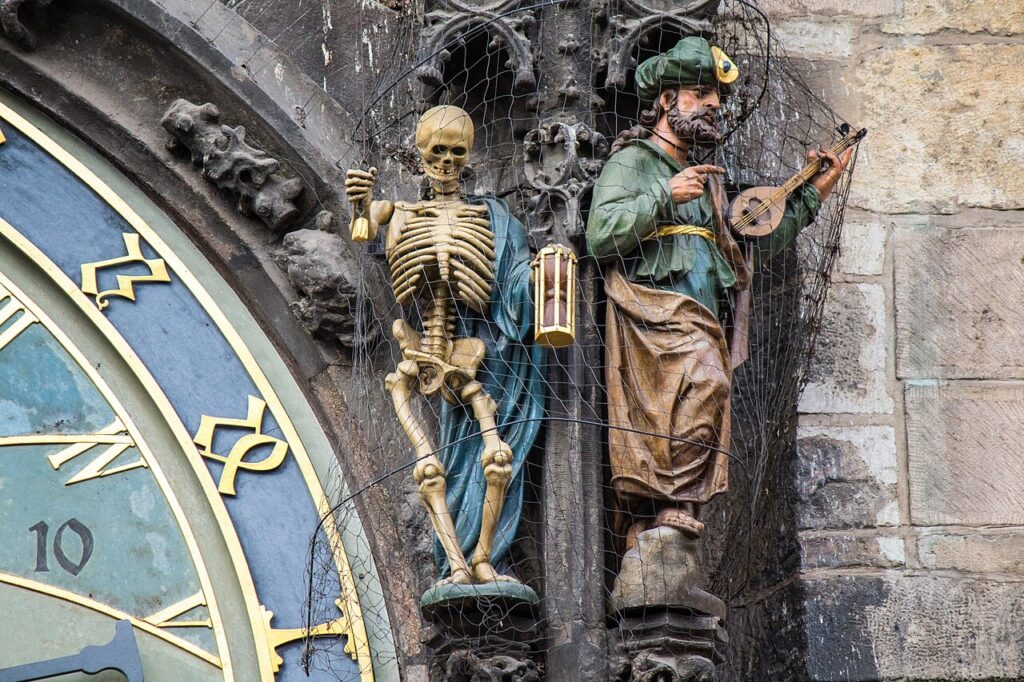
Other infamous haunted clocks include The Sussex Grandfather Clock (Sussex, England) and The Warren Occult Museum’s Organ Clock (Monroe, Connecticut, USA).
So intriguing is the topic, that Brian Balmages wrote a musical score titled “Haunted Clocks” in 2014. The piece “tells the story of a haunted clock factory and its mischievous inhabitants,” and is wildly popular with school orchestras to this day.

Most of Montreal’s haunted clocks are located on St. James Street, an area associated with the extreme desecration of French colonial cemeteries by various financial corporations.
Rue Saint Jacques was first recorded on a map by François Dollier de Casson in 1672, thirty years after the founding of the French colony of Ville Marie.
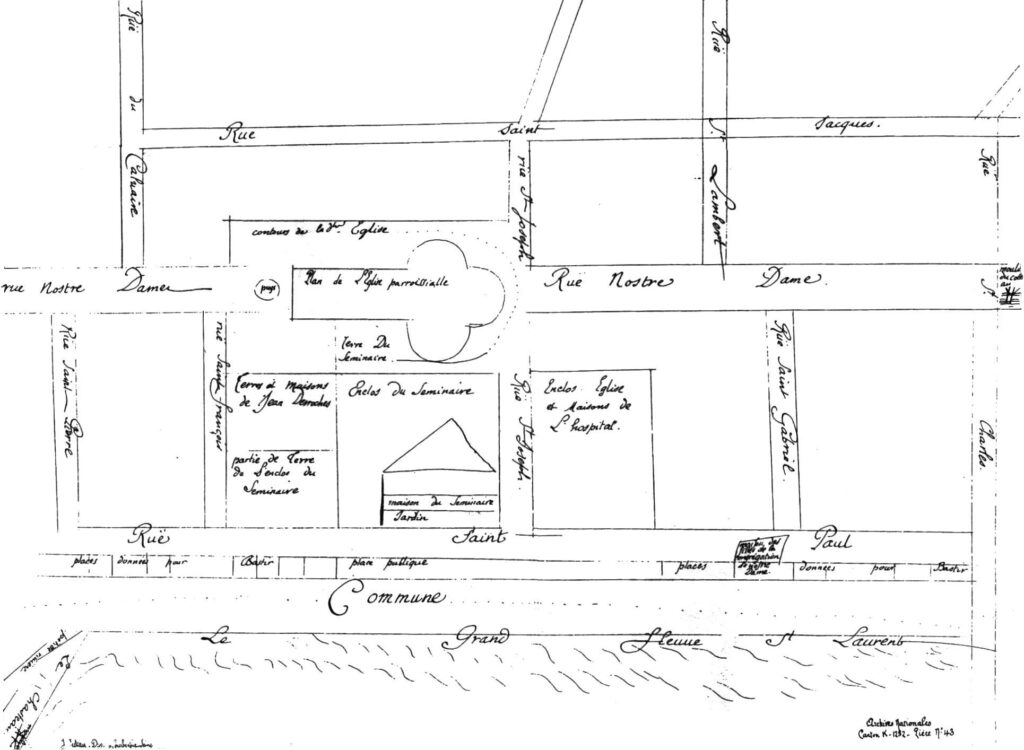
For almost a hundred years, the area surrounding the street was associated with French colonial cemeteries, which stretched from the Place d’Armes all the way to today’s McGill Street.
When the city capitulated to the British Army in 1760, the new governors made plans to stop all burials within the then walled city for health and sanitary reasons. New Protestant and Catholic cemeteries were opened to the north-west and burials ceased to continue in the old colony.
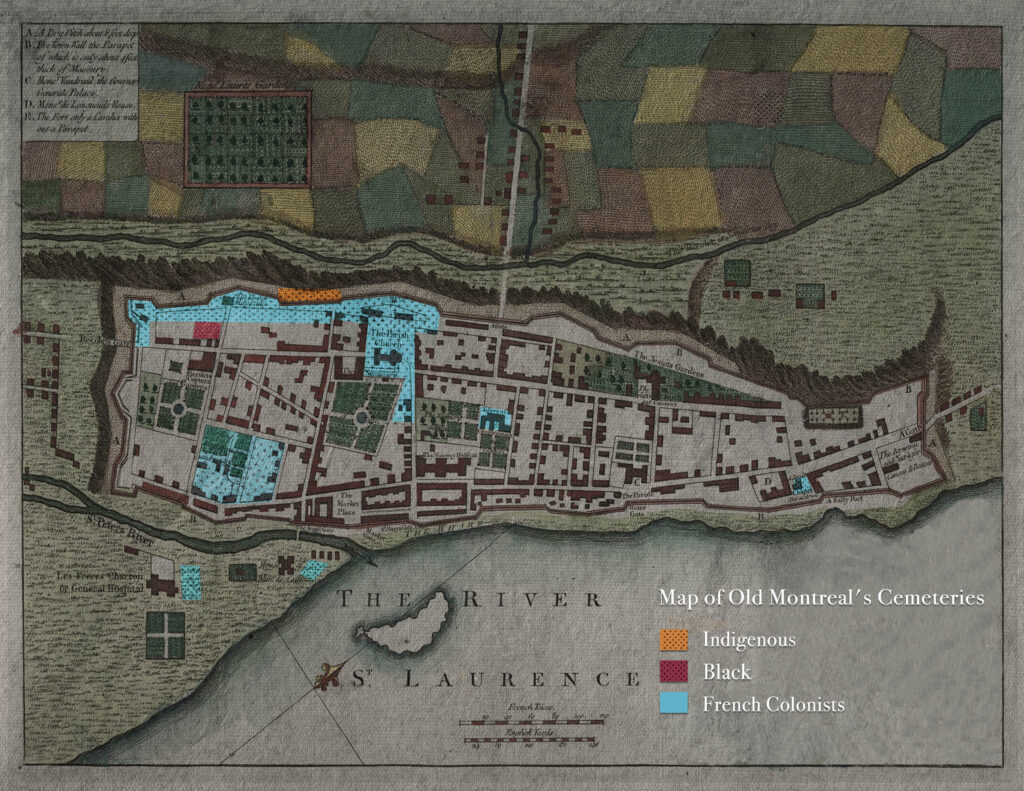
Indeed, the older cemeteries were quickly forgotten, and Saint Jacques Street was anglicized into St. James Street.
Under British rule, Montreal soon expanded into being the largest city and economic hub of British North America. By the 1800’s financial entities of all sorts were setting up shop, spurred by the banking, trade and insurance sectors.
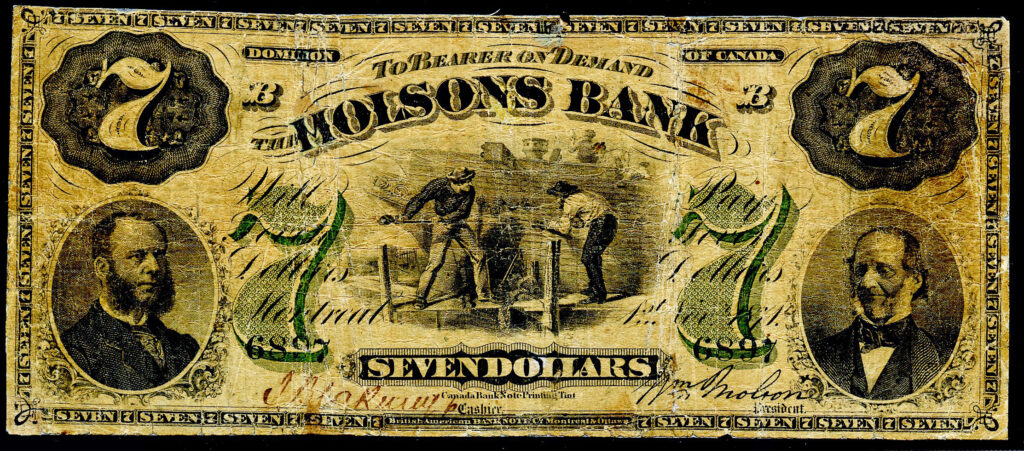
With the Industrial Revolution in full swing, rapid growth of the street was assured.
It began in 1818, when the first Bank of Montreal built its headquarters on St. James Street. Other financial companies soon followed, such as the Royal Bank of Canada, Banque canadienne nationale, Banque provinciale du Canada, Molsons Bank, Merchants Bank, Montreal City and District Savings Bank, Royal Trust Company, Crown Trust Company, and Nesbitt Thomson.
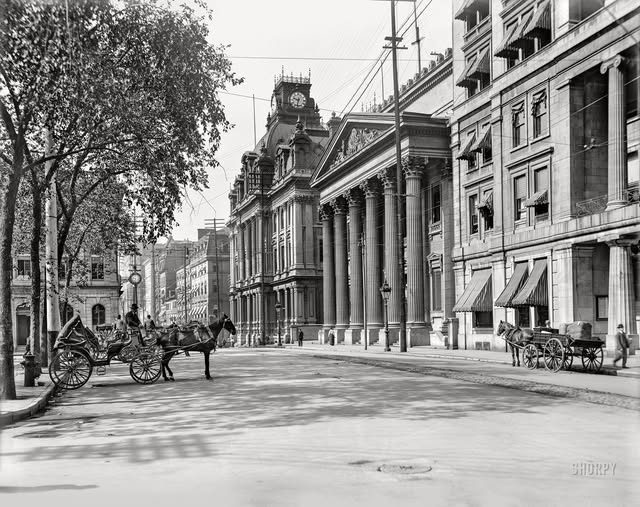
Numerous British insurance companies also installed their head offices on St. James Street, including the Life Association of Scotland, Liverpool & London & Globe Insurance, Yorkshire Insurance, Standard Life, Colonial Life, Guardian Fire and Life, and London and Lancashire Insurance.
With so much building and financial investment, it wasn’t long before St. James Street became known as the “Wall Street of Canada”.
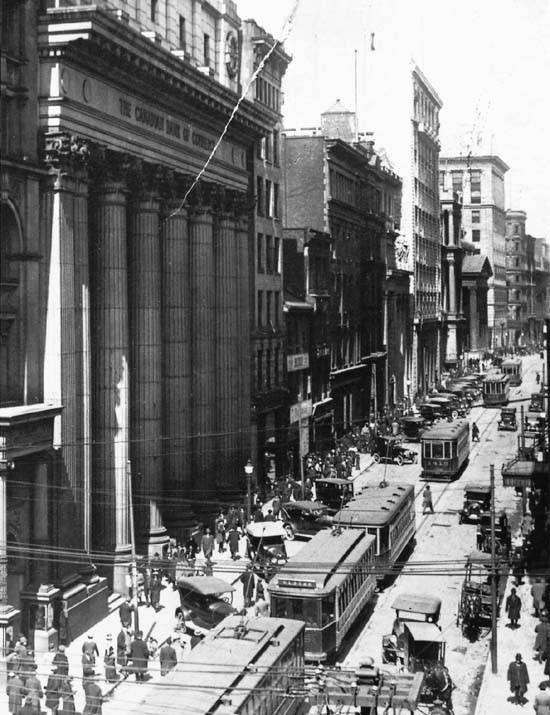
However, it is hard to ignore that these opulent buildings were constructed on the footprint of the French, Indigenous and Black colonial cemeteries, meaning thousands of skeletons were unearthed and disposed of during construction.
Records are scarce about what happened to all these human remains, but during the era financial progress was seen as far more important than respecting the Dead. It is likely that in many cases the human bones were considered merely part of the soil to be excavated and disposed of.

According to the late historian E.A. Collard:
“The principal cemeteries were just inside the northern wall marked by Fortification Lane today. They occupied the area beginning close to the wall and extending down to about the middle of what is now St. James Street…This means that the buildings on the north side of St. James Street today are standing in these old cemeteries. When the custom of burying “within the walls” was abandoned, most of the old bones were left lying where they had been interred.”
Collard continued: “Later, when foundations and cellars for the buildings on St. James Street’s upper side were being dug the bones were unearthed. Even then, in some cellars, the bones were not all removed. They were left lying above ground. A story of a cellar full of bones is told about a building at or near the corner of St. James Street and Victoria Square.”

Indeed, a reporter at the Montreal Gazette wrote in 1872: “The writer has frequently been told by a gentleman who in his boyhood resided in St. James Street… that a wine cellar of more than ordinary depth was almost paved with bones and skulls, and that for this reason none of the servants could be induced to go into the place alone, save an old butler who had the cellar in charge, and who cared so much for his wines that all the ghosts in a dozen grave yards would not have frightened him from them.”
The fact that the cemeteries being desecrated by British financial interests contained mostly French, Black and Indigenous corpses likely did not sit well with these colonized communities. Indeed, two of these cemeteries contained interred slaves from the New France era, many of them children.
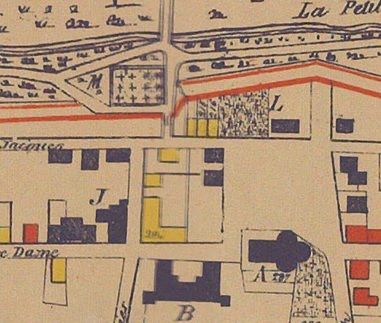
To make matters worse, British commercial interests began to install clocks on banks and a skyscraper along St. James Street.
It is worth noting that clocks are almost never found in cemeteries. The reasoning is that the Dead do not like to be reminded of the passage of time. The Dead usually wish to lie undisturbed in their final resting places for eternity.
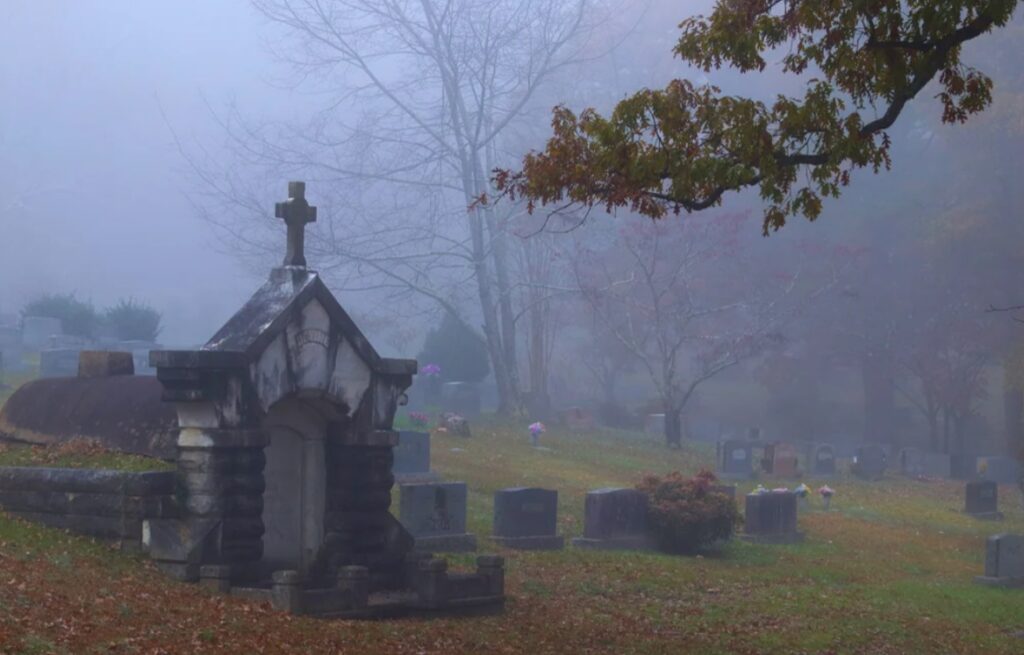
The installation of the clocks disturbed the Dead even further with their constant ticking sounds, regulating the bustling commercial district built upon their burial grounds.
Today, four clocks overlook the street and three of them are said to have serious paranormal issues.
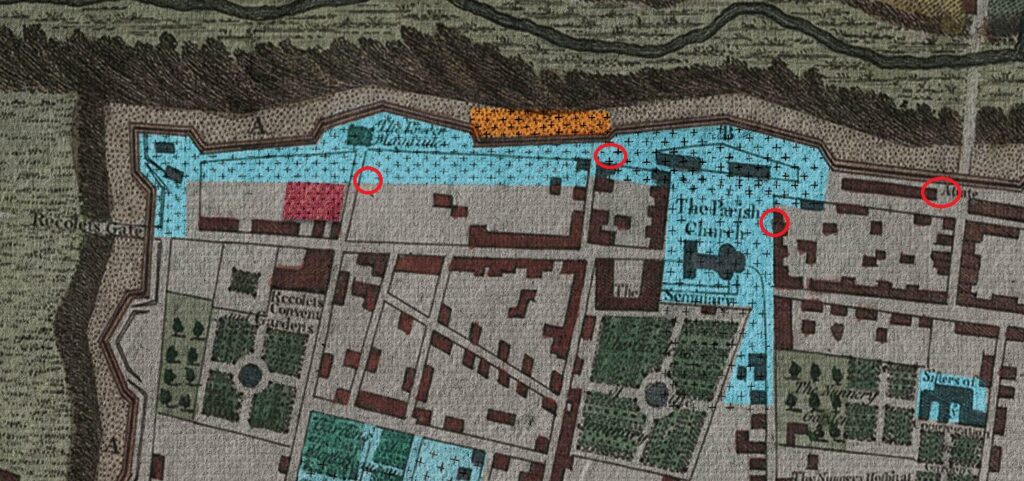
The clocks include, from the east on the corner of St. Laurent Boulevard to the west on the corner of St. Pierre Street:
- An antique clock on the La Presse Building (north-west corner of St. Laurent Boulevard).
- An astronomical clock on the New York Life Insurance Building clocktower (overlooking Place d’Armes, near the cornerof Côte de la Place-d’Armes).
- A Modernist standing clock outside the Bank of Montreal Main Office Building (north-east corner of St. Francois-Xavier Street).
- A classical standing clock outside the Molsons Bank (south-east corner of St. Pierre Street).
Starting with the antique clock on the La Presse Newspaper Building, this charming clock was likely installed upon completion of the edifice in 1900.
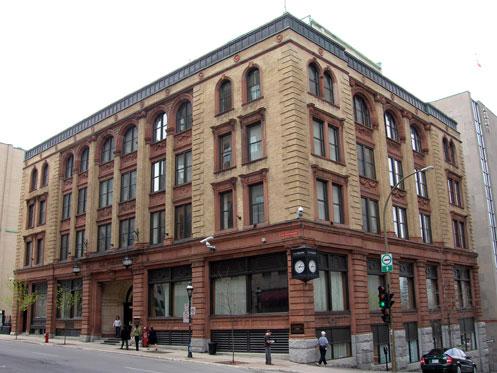
Situated on the north-west corner of St. Laurent Boulevard and St. James Street, the clock hangs off a pillar of the building overlooking the corner.
Shaped like a black box with tapered pyramids on the top and bottom, it features two round clocks on each corner with the words “La Presse” inscribed above the time mechanism.
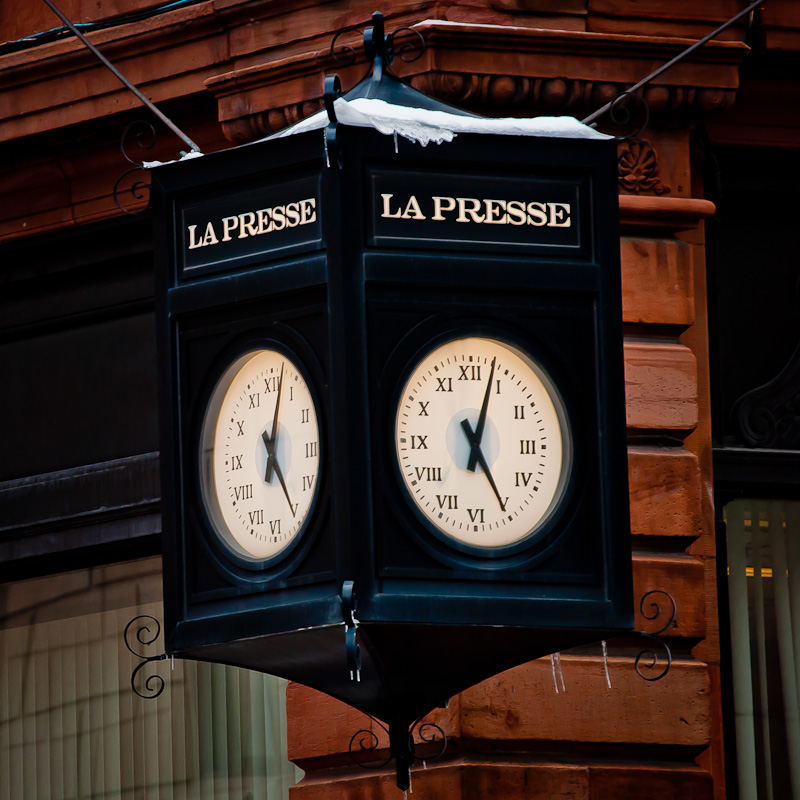
Despite being situated a stone’s throw from the New France era jail, where prisoners were chained to the wall and tortured, the La Presse antique clock is not said to be haunted. This is probably because it was not built atop a cemetery, unlike the other three clocks on St. James Street.
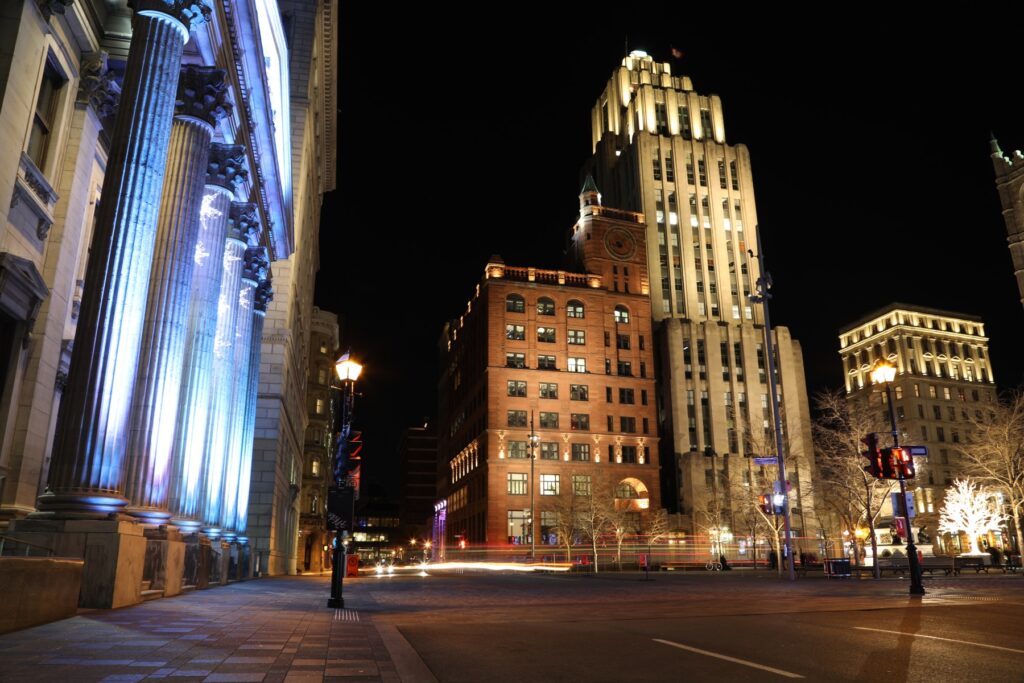
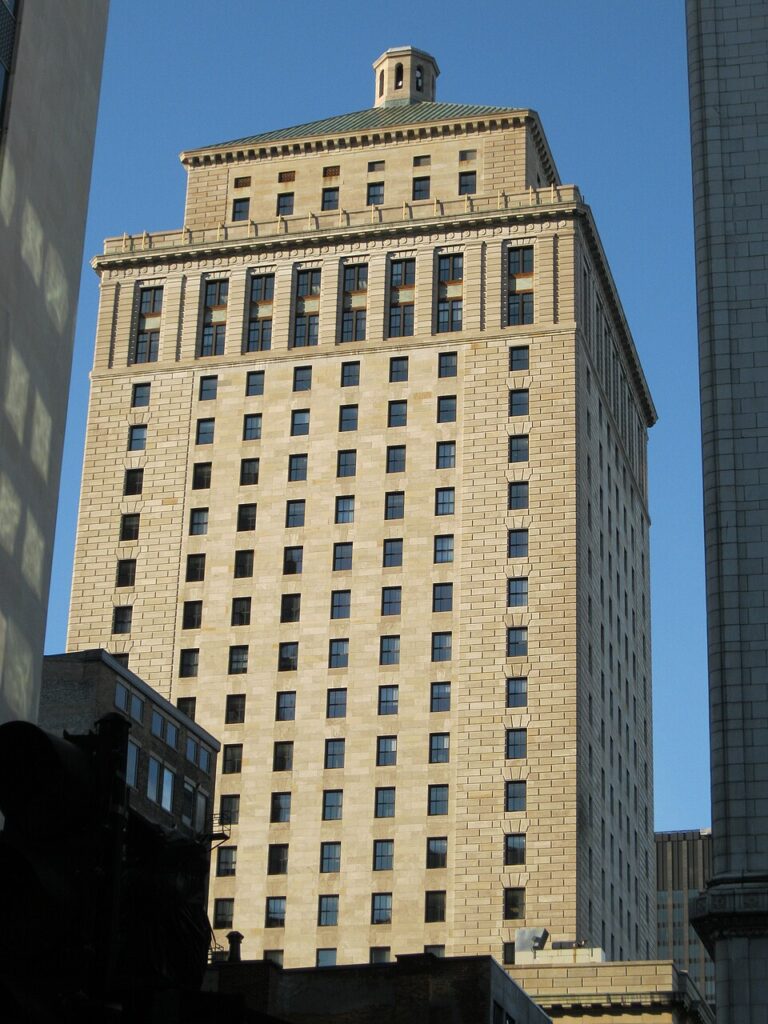
Moving westward, the next clock soars high above the Place d’Armes on the tower of the New York Life Insurance Building.
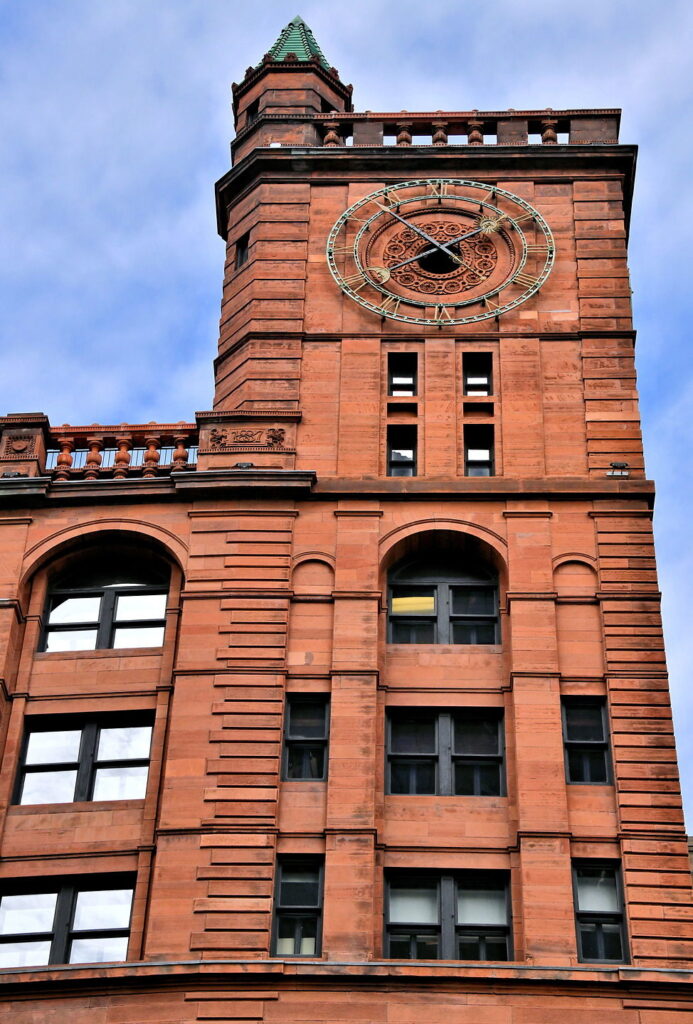
The New York Life Insurance Building was erected from 1887–1889 and was the first skyscraper in Montreal at 152-feet tall. The first eight floors were designed for retail office space and hosted some of best lawyers and financiers in the city.
When the clock tower was completed in 1889, the owner created the largest legal library in the country on the ninth and tenth floors. Impressively, the red sandstone building also featured electric lighting, water tanks and the city’s first elevator. Designed by architects Babb, Cook and Willard and contractor Peter Lyall, the final cost was $750,000.
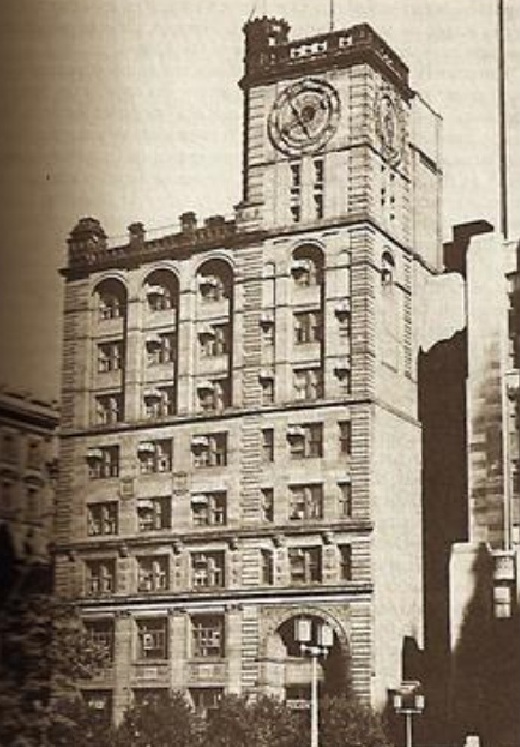
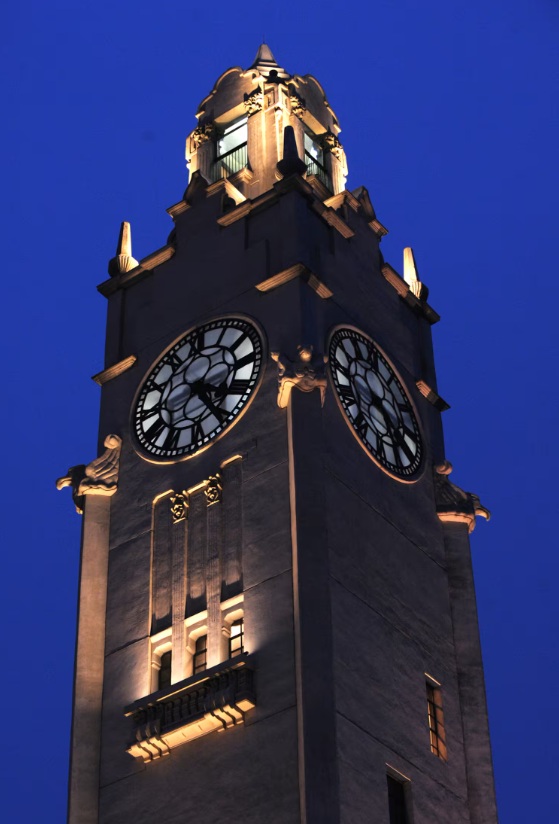
The clock tower features two whimsical astronomical clocks, one overlooking St. James Street on the west and the other the south.
The 1899 tower clocks feature a sun and a moon on its hands, which are typical elements of astronomical clocks. The symbolism represents balance and harmony between opposing forces, especially the perpetual cycle of day and night.

However, the New York Life Insurance Building was built on part of a cemetery on the Place d’Armes. The tower clocks have been anything but harmonious.
Notably, these giant towering clocks overlooking the square have been reported to cause paranormal disturbances during the Devil’s Hour.
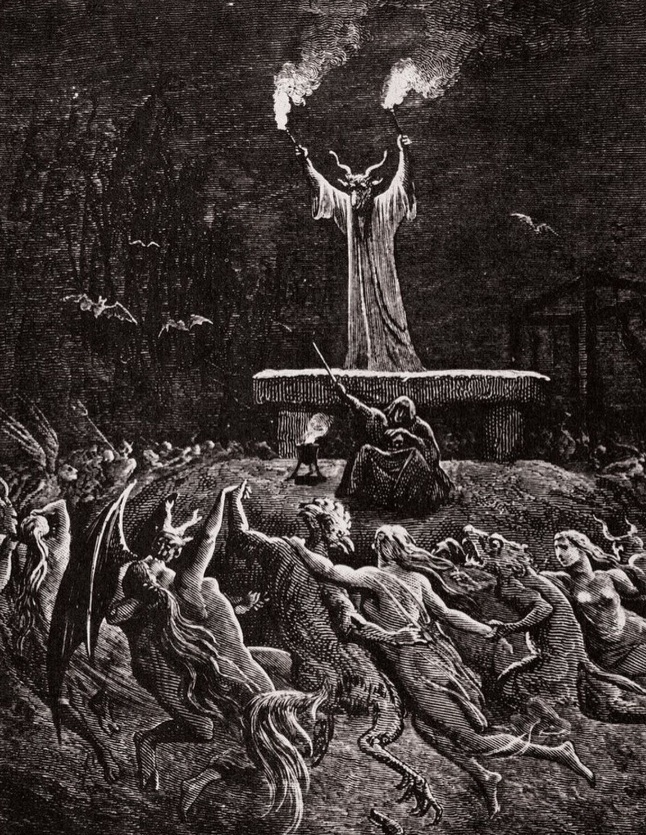
While the area is usually devoid of human activity in the dead of night, there is a harrowing tale about a man who experienced paranormal activity beneath the clocktower while out late.
A client named Laurent Desjardins contacted Haunted Montreal in 2015, telling us that he had witnessed something unexplainable while crossing the Place d’Armes in the middle of the night during a blustery October evening.
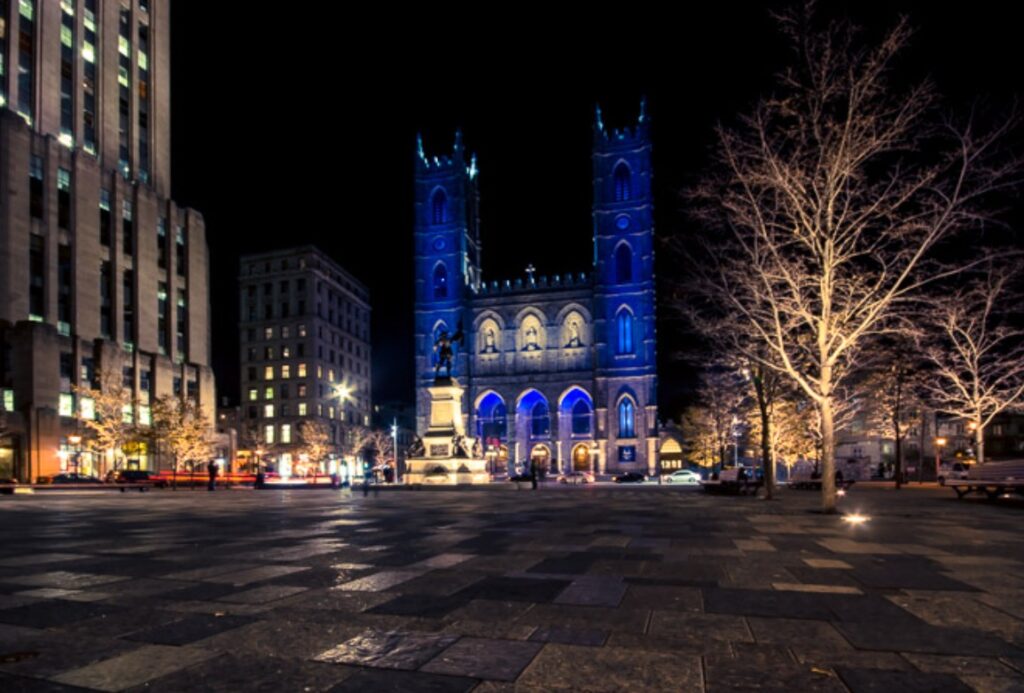
He said: “I had finished my shift at a fancy restaurant on Saint Paul Street and was walking home to my apartment on the Plateau when I arrived at the Place d’Armes. All the shops were shuttered for the night, and a cold wind was howling and scattering leaves throughout the square. It was pretty miserable.”
He added: “Suddenly, the air grew heavy. Shadows began to move in an unnatural way, like ink spilling across a page. It was really creepy to watch. I then heard what sounded like thunder above me. I looked up and saw that the giant clock on the skyscraper, with its sun and moon hands. It seemed to be glowing red.” He noted that it was exactly 3:33 a.m.
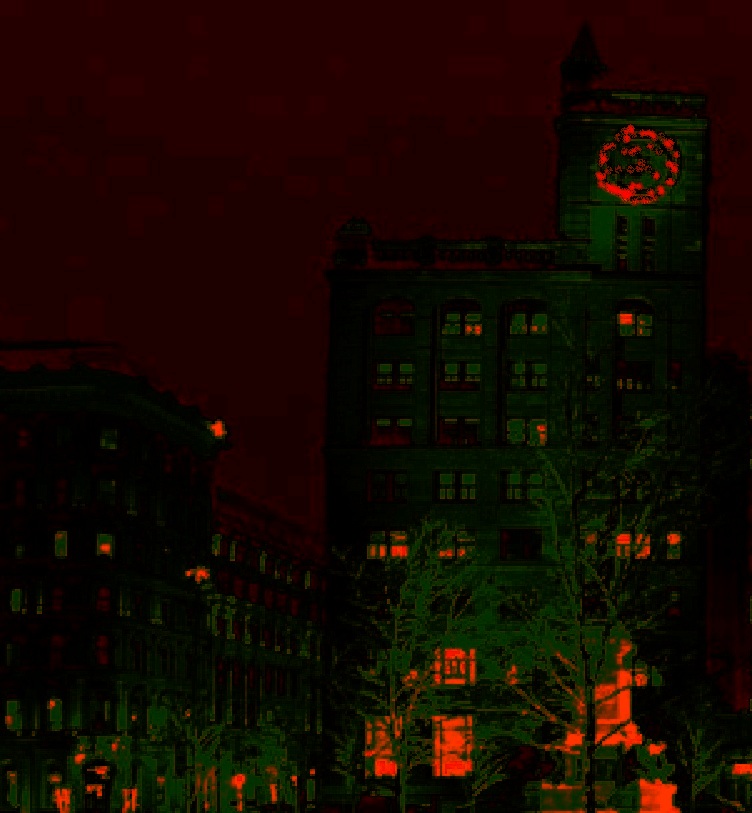
A chill ran up his spine – and then the whispers began. They rose from the ground. It sounded like a layered murmur of voices, whispering in a muffled French. The faint voices, male and female, sounded as though they were pleading, warning and mourning.
He explained that the temperature felt like it plunged about 15 degrees Celsius. Laurent then saw about a dozen translucent figures slowly begin to emerge, headfirst, from the ground. Peering through the gloom, he saw the outlines of men and women wearing in tattered clothing from the colonial era. The apparitions rose to just above the pavement, where they hovered a few inches in the air.
Their eyeless faces turned toward Laurent, as though drawn to the living warmth he carried.

Trembling in the freezing air, Laurent felt extremely unwelcome and frightened as the ghostly, eyeless figures seemed to stare at him directly. He felt as though they wanted something from him.
“I began to run as fast as I could to the other side of the square,” he said, “and once I was safely past it, I turned around to look back in case they were following me. I was very relieved to see that here was nothing there. The temperature was normal again and the Place d’Armes was empty.”
When Haunted Montreal explained to Laurent that the Place d’Armes was built on top of a colonial cemetery and suffered all sorts of paranormal activity, he vowed never to take that route home ever again.
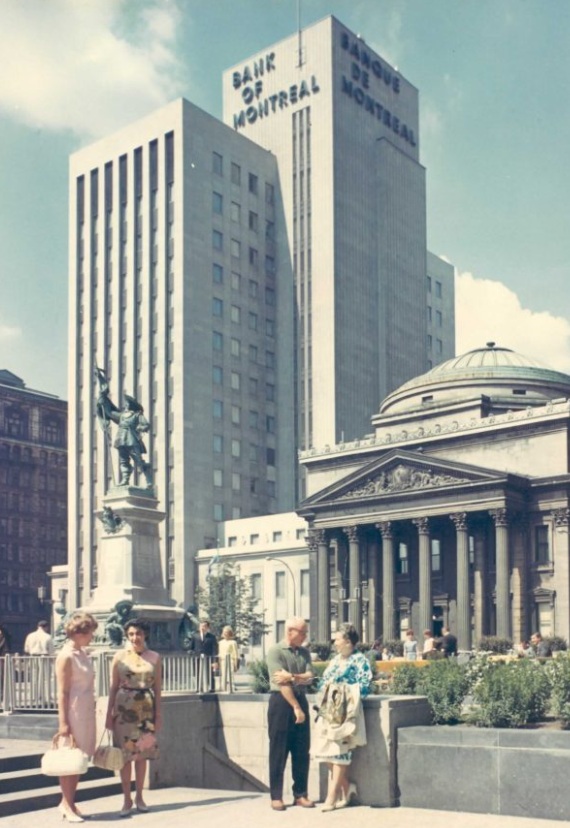
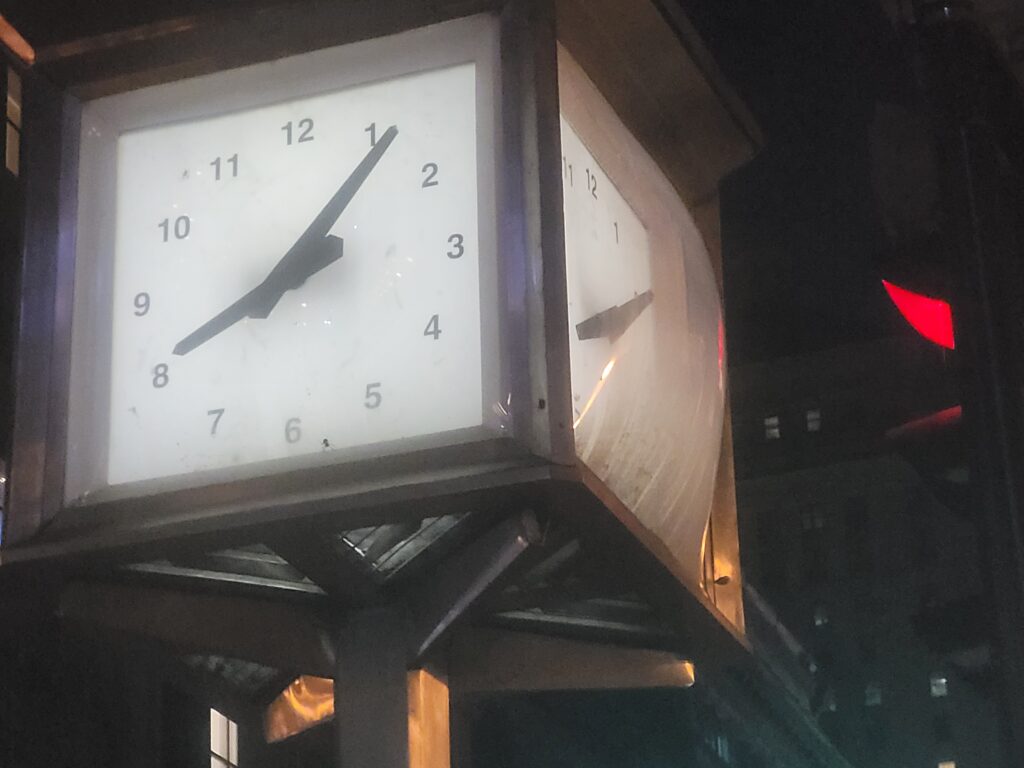
The second haunted clock is located outside the Bank of Montreal Main Office Building on the north-east corner of St. Francois-Xavier Street and St. James Street. Box-like and silver in colour, it has been described as a Modernist standing clock. Likely installed in 1960, this is the newest clock on the street.
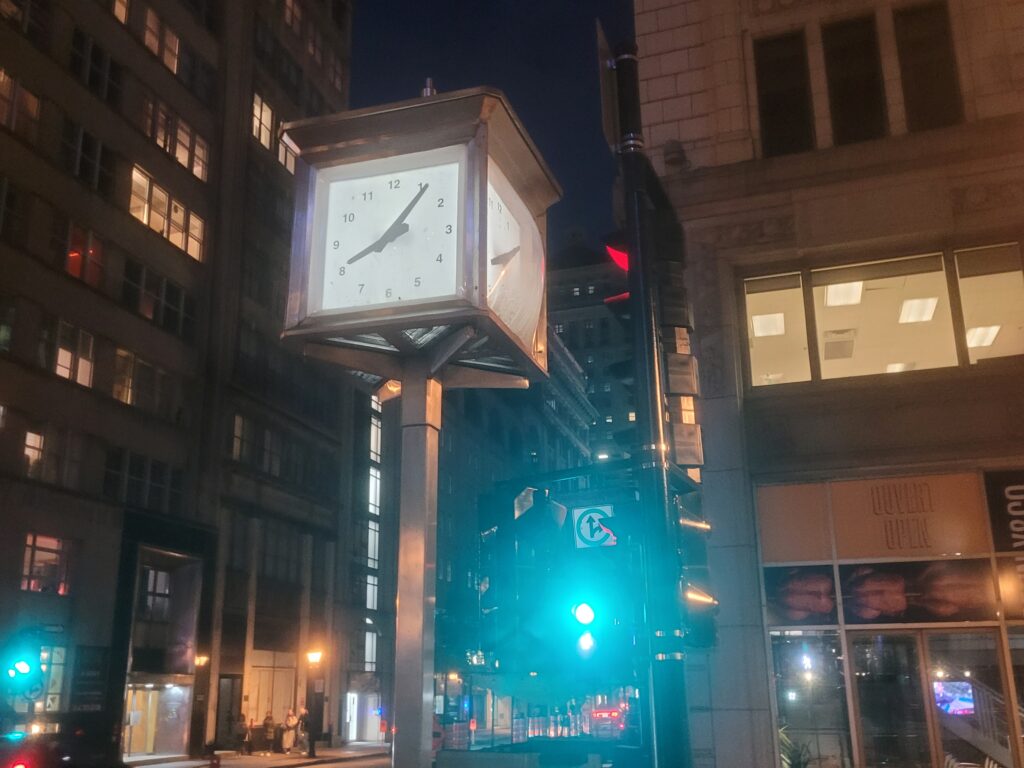
The Bank of Montreal Main Branch was constructed in 1960 after the adjacent 1847 neoclassical bank was deemed too small to meet demand.
At 17-stories, the Modernist skyscraper overshadows the original bank.
The Bank of Montreal clock is reputed to be haunted by many visitors. Indeed, it is the meeting location for the Haunted Old Montreal Ghost Tour.
Guests have reported feelings that the clock is watching them and some have even heard tapping noises from within the clock face. It almost sounds like someone is inside the clock, as though wanting to be let out.
One client swears that he actually saw a distorted skull appear in the clock’s glass for a few seconds before vanishing.
In other cases, people have claimed to feel someone or something tapping them on the shoulder, grabbing their feet and even tripping them on occasion.
Lastly, electronics tend to malfunction in the vicinity of the clock, such as smartphones losing all battery power, video cameras having footage deleted and laptops turning themselves on and off.

Overall, most people who have experienced these phenomena described a feeling of being unwanted in the immediate vicinity of the Bank of Montreal clock.
The final clock stands outside the Molsons Bank on the south-east corner of St. James and St. Pierre streets.
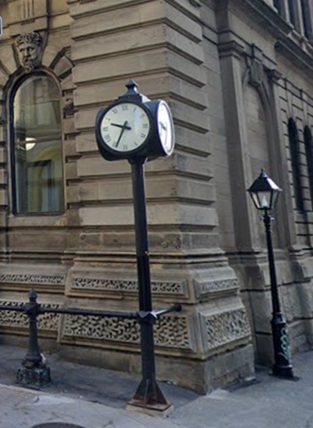
The Molsons Bank was founded in 1837 by brothers William and John Molson, Jr., the sons of brewery magnate John Molson. As the bank grew, the brothers soon decided buy land on the prestigious St. James Street for their headquarters.
Designed by architect George Browne, the Molsons Bank was the first edifice in Montreal to be built in the Second Empire style, from 1864-1866. The building features an ornate stone facade, mansard roof, copper detailing, paired columns, and intricate carvings.
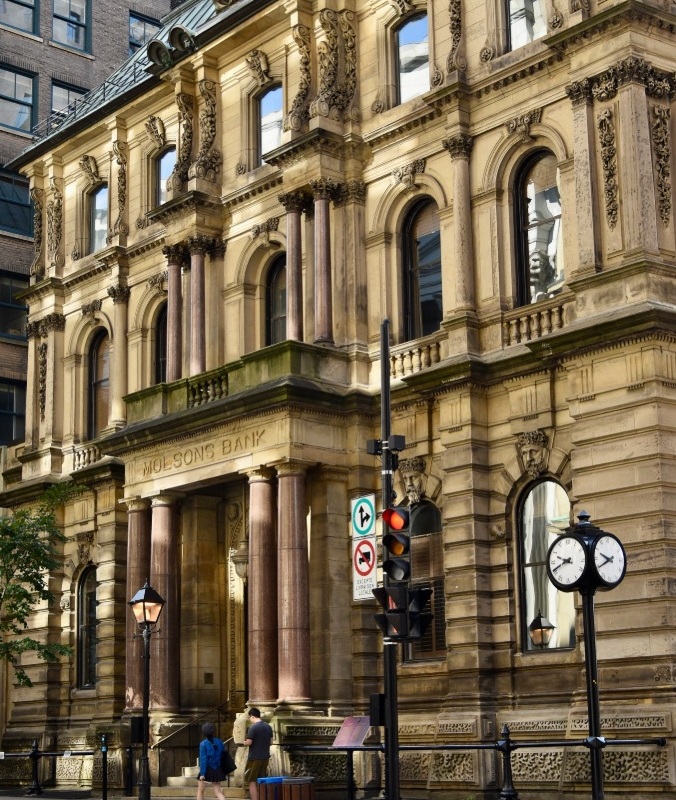
The street clock has a classical appearance and complements the handsome building.
However, there have been many instances when the clock has simply stopped ticking dead in its tracks. Historians note that this may be because the bank was partially built on the colony’s Black slave cemetery, along with the Royal Bank Building just to the west across St. Pierre Street.
People who witness the clock stopping often cross themselves if they know the legend of this haunted timepiece. According to the urban legend, when the time stops on the Molsons Bank clock, it signifies a bad omen. It usually foreshadows an inevitable tragedy in the vicinity.
This may be tied to an old European tradition of stopping the clocks when someone dies.
After getting over the initial shock of the death, mourners had to cover all the windows with thick curtains and let passers-by know of the death by putting black ribbons or a wreath on the door.
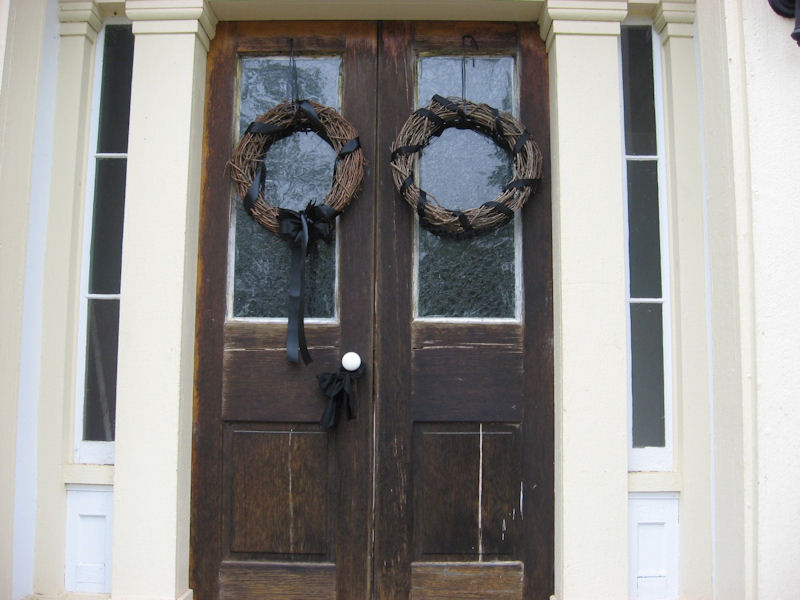
Precautions were needed to safeguard the spirit of the deceased. Clocks had to be stopped to respectfully mark the time of death and to ward off bad luck. This was said to prevent the spirit from wandering aimlessly through time and space, unsure where to go.
The clocks would be started again for the funeral so that the spirit could leave and not haunt the house or vicinity.
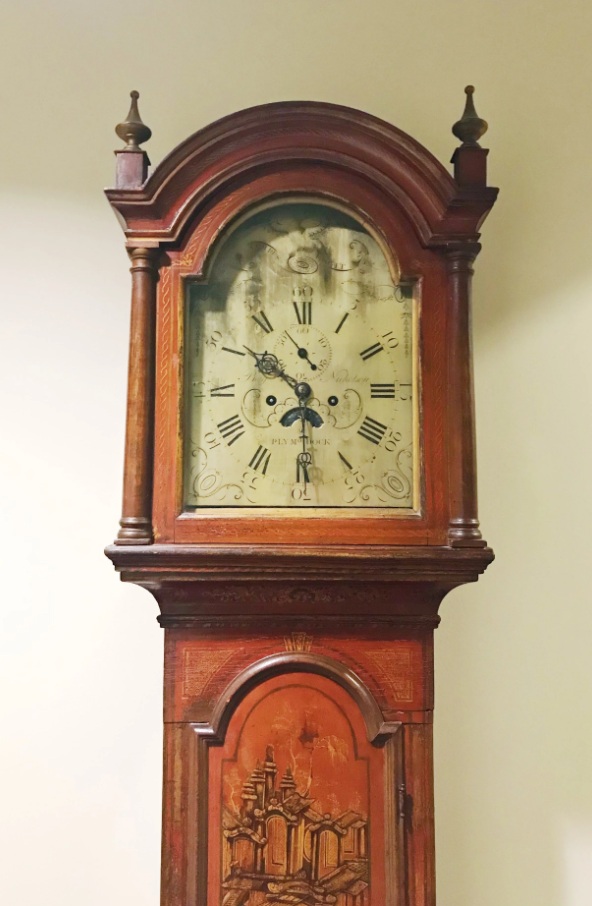
Returning to the Molsons Bank clock, it has stopped on many occasions in the past just moments before tragic events such as streetcar accidents, explosions and deadly fires.
The most infamous case occurred in the morning of June 13, 1910. Some bankers standing by the clock noticed that it suddenly stopped ticking and froze at exactly 10:29 a.m.
About 30 seconds later, they heard a loud crashing noise about three blocks west on St. James Street, followed by ear-piercing screams and falling glass and masonry. What they had heard was the devastating collapse of the nearby Montreal Herald Newspaper building. At five storeys tall, the building was full of workers putting together the evening edition of the paper.
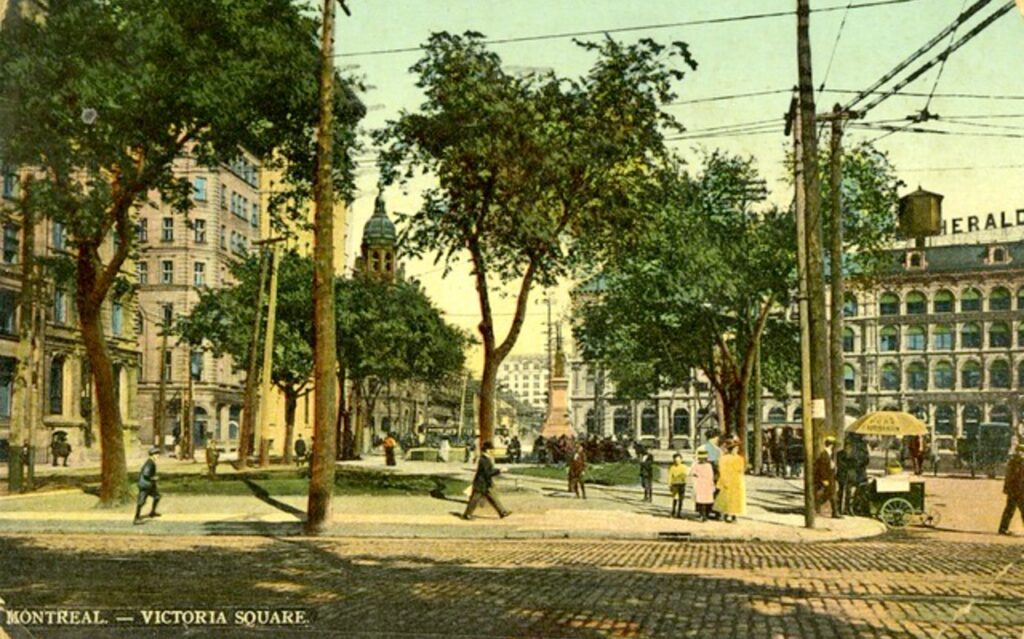
The collapse was triggered when the 30,000-gallon water tank atop the structure, designed to assist in case of a fire, suddenly gave way and went crashing through the building. As the giant cistern plummeted through the floors of the building, it burst and swept press machinery, office furniture and shocked workers with it into the void of a quickly-flooding basement. The back portion of the building was completely destroyed. Ironically, a deadly fire then broke out in the front part the structure that was still standing.
With around 300 workers in the building, there was sheer panic as people tried to rescue their injured colleagues and evacuate the burning, wrecked building.
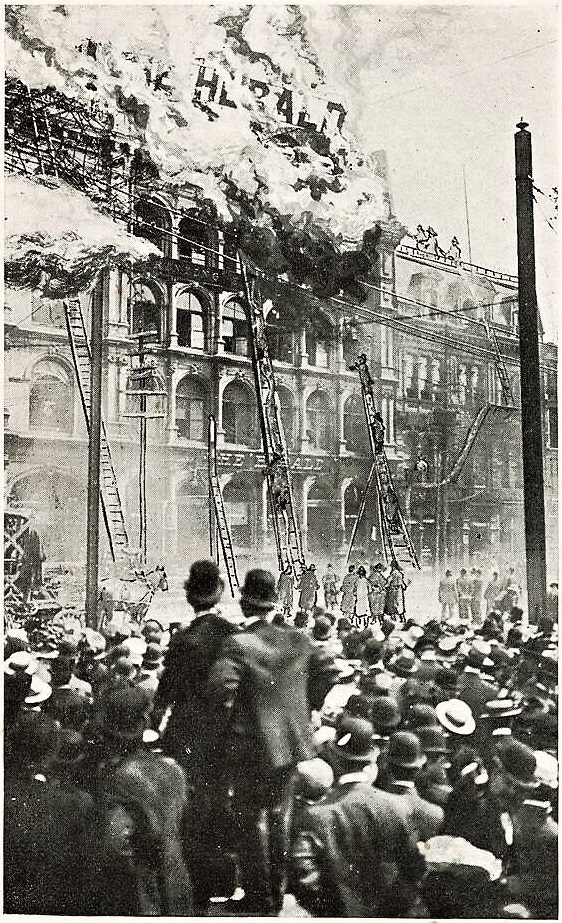
Once the survivors were rescued and blaze was extinguished, it took nearly a week for police, firemen, and volunteers to extract the remains of thirty-three unfortunate employees.
Nineteen men and fourteen women were killed in the tragedy. Many were young girls working in the bindery department near the back of the edifice, which was located directly under the water tank. Most of the corpses were found bloated in the flooded basement or charred beyond recognition. The disfigured bodies were taken to the city morgue to try and identify them.
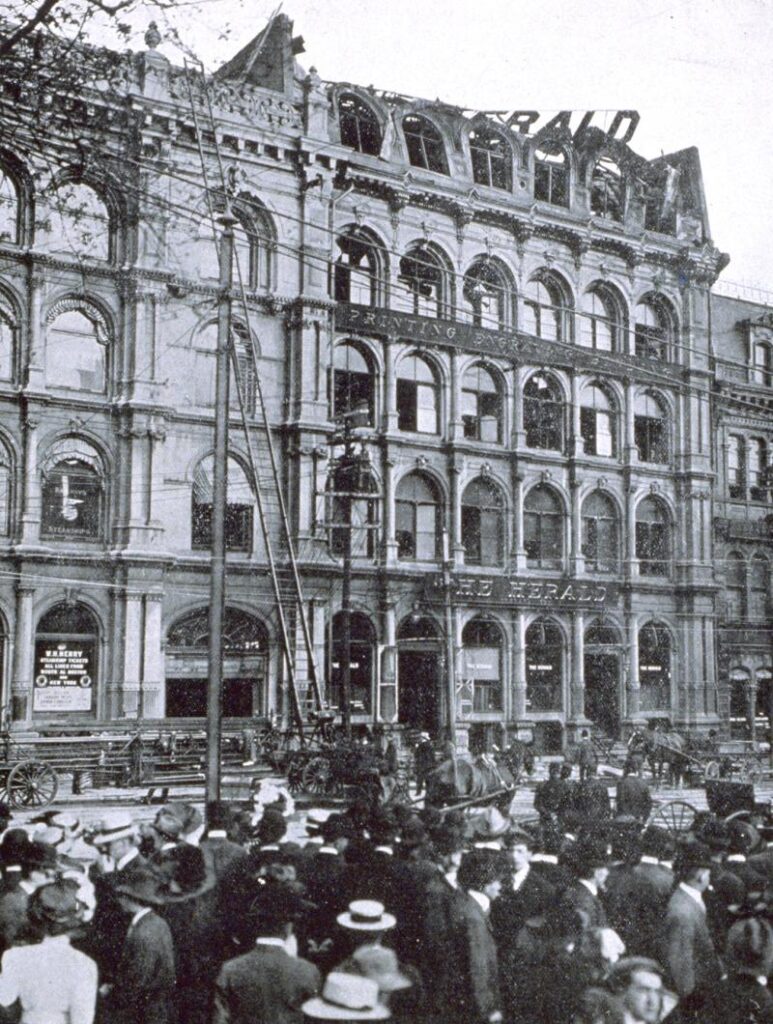
It was perhaps the deadliest building collapse in Montreal’s history.
As for the haunted clock at the Molsons Bank, it had to be restarted by technicians, as it had many times before.
Today, St. James Street is a shadow of its former glory as the financial center of Canada. During the 1970s, Toronto overtook Montreal as the wealthiest Canadian city.

A mass exodus of corporate head offices was triggered by political uncertainty and new laws that made French the only official language in the province.
Since then, the old banks on St. James Street have mostly been repurposed into fancy hotels, high-end condominiums, events spaces, etc.
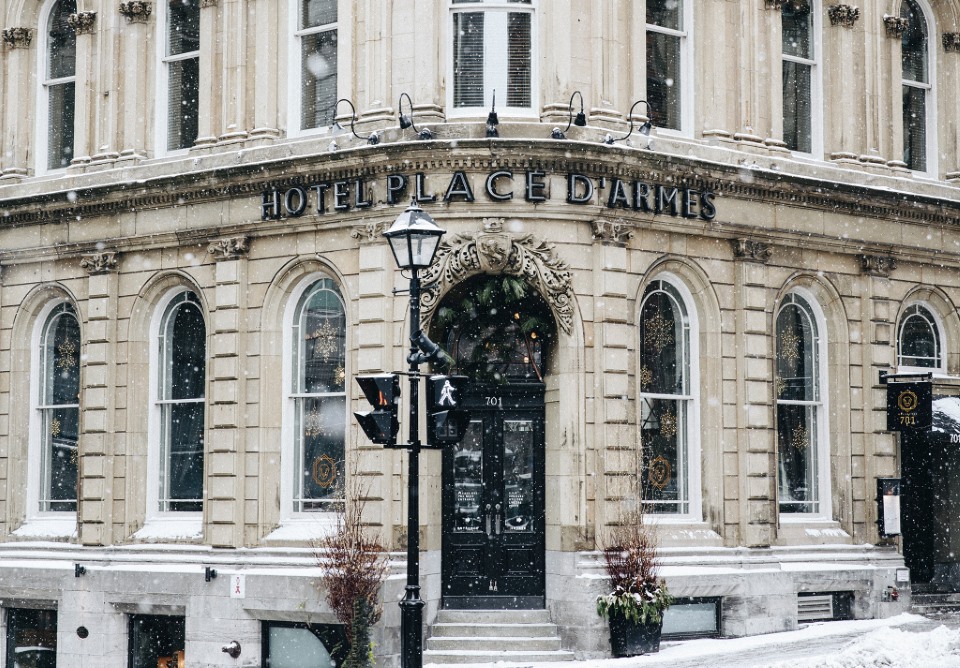
However, the clocks on the street are still there, bearing witness to the former financial era – and terrifying people at times with their paranormal activity.
In conclusion, haunted clocks fascinate and frighten people all over the world. According to superstition and folklore, installing a clock in a cemetery could have several potential consequences for the dead, primarily related to disturbing their eternal rest and disrupting the timeless, spiritual atmosphere of the graveyard.

The fact that St. James Street hosts three haunted clocks is remarkable. It is also understandable given that the former “Wall Street of Canada” was erected upon the vast colonial cemeteries from the old French colony of Ville-Marie.
Given the deranged history and paranormal activity, walk this historic street at your own risk!
Company News
Haunted Montreal is running our Haunted Pub Crawl every Sunday at 3 pm in English throughout the winter months. Tours in French happen on the last Sunday of every month at 2 pm.
Private tours for any of our experiences (including outdoor tours, except for Haunted Mountain) can be booked at any time based on the availability of our actors.
Clients can request any date, time, language and operating tour. These tours are based on the availability of our actors and start at $235 for small groups of up to 8 people.
Email info@hauntedmontreal.com to book a private tour!
You can also bring the Haunted Montreal experience to your office party, house, school or event by booking one of our Travelling Ghost Storytellers today.

Hear some of the spookiest tales from our tours and our blog told by a professional actor and storyteller. You provide the venue, we provide the stories and storyteller. Find out more and then contact info@hauntedmontreal.com
In other news, if you want to send someone a haunted experience as a gift, you certainly can!

We are offering Haunted Montreal Gift Certificates through our website and redeemable via Eventbrite for any of our in-person or virtual events (no expiration date).
For those hoping to do some holiday shopping, our online store is open until the end of December!
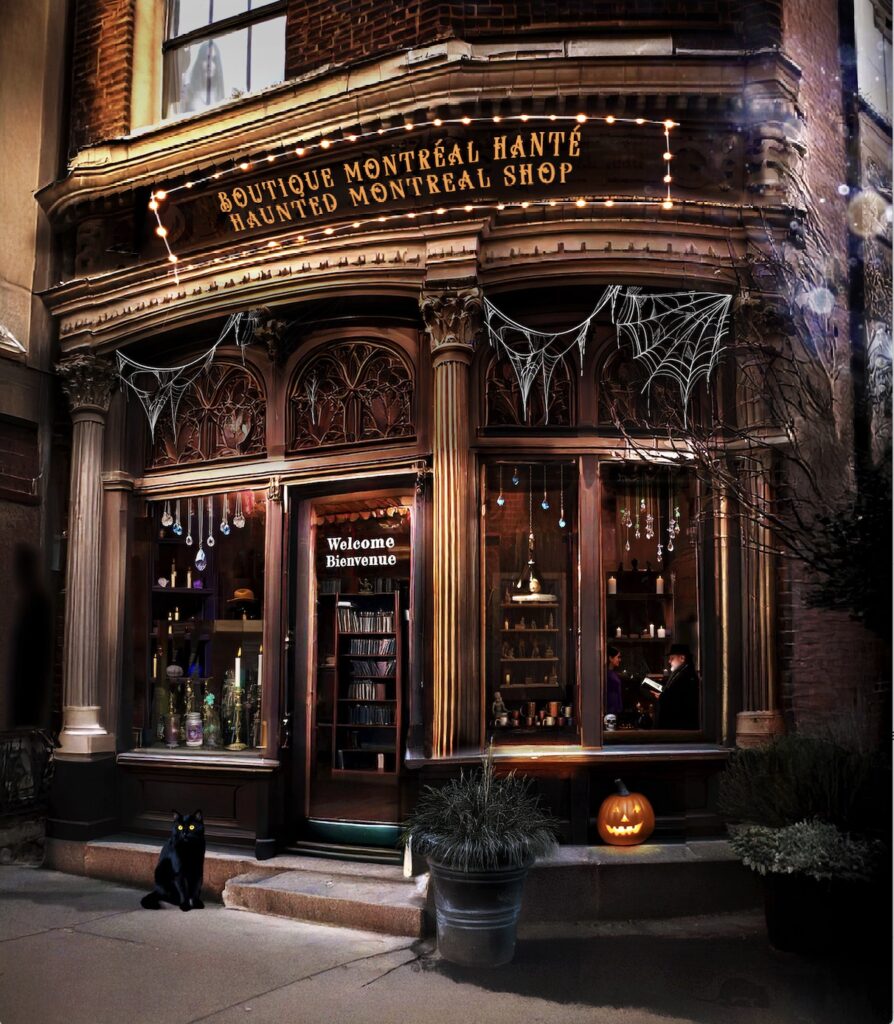
We have Haunted Montreal t-shirts, mugs, and even toques, and other assorted items. Visit shop.hauntedmontreal.com
Our team also releases videos every second Saturday, in both languages, of ghost stories from the Haunted Montreal Blog.
Hosted by Holly Rhiannon (in English) and Dr. Mab (in French), this initiative is sure to please ghost story fans!

Please like, subscribe and hit the bell!
Haunted Montreal also has temporarily altered its blog experience due to a commitment on a big writing project! Until further notice, we will be offering updates on old stories every second month and the regular blog service alternating.

Haunted Montreal would like to thank all our clients who attended a ghost walk, haunted pub crawl, paranormal investigation or virtual event!
If you enjoyed the experience, we encourage you to write a review on our Tripadvisor page and/or on Google Reviews – something that really helps Haunted Montreal to market its tours.

Lastly, if you would like to receive the Haunted Montreal Blog on the 13th of each month, please sign up to our mailing list.
Coming up on January 13: Update on the Dow Brewery
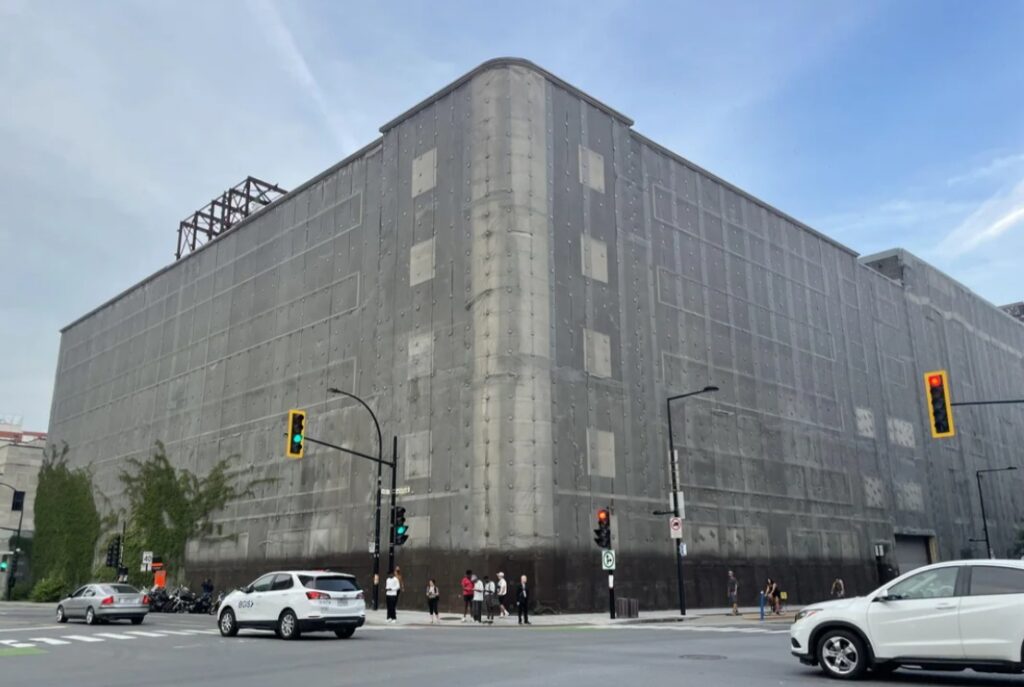
The abandoned and haunted Dow Brewery is in the process of being repurposed into a new campus pavilion by the École Technologie Superieure. Amiante National Asbestos has been hired to deconstruct the old Brewery, including asbestos removal, decontamination, removal of toxic products and mold and stripping away all interior finishes. With plans to then demolish several buildings before new constructions begin, there are fears that human remains may be found and ghosts may be stirred up during the work.
Author:
Donovan King is a postcolonial historian, teacher, tour guide and professional actor. As the founder of Haunted Montreal, he combines his skills to create the best possible Montreal ghost stories, in both writing and theatrical performance. King holds a DEC (Professional Theatre Acting, John Abbott College), BFA (Drama-in-Education, Concordia), B.Ed (History and English Teaching, McGill), MFA (Theatre Studies, University of Calgary) and ACS (Montreal Tourist Guide, Institut de tourisme et d’hôtellerie du Québec). He is also a certified Montreal Destination Specialist.
Translator (into French):
Claude Chevalot holds a master’s degree in applied linguistics from McGill University. She is a writer, editor and translator. For more than 15 years, she has devoted herself almost exclusively to literary translation and to the translation of texts on current and contemporary art.
Related Posts


Comments (0)